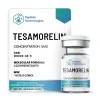

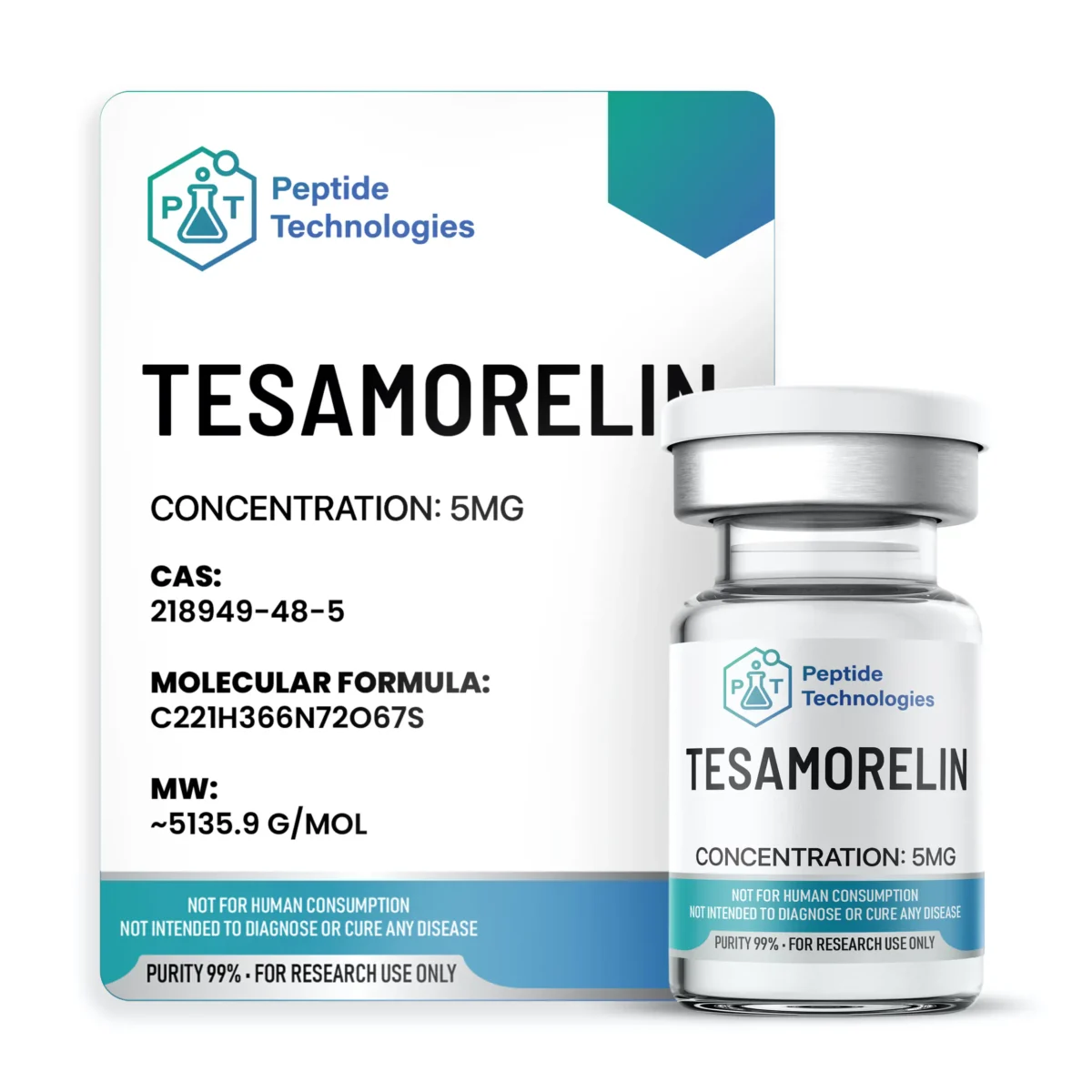
Tesamorelin 5mg
$39.95
Discover Tesamorelin 5 mg from Peptide Tech Solutions, a synthetic GHRH analog provided at ≥ 99% purity. Ideal for in-vitro and biochemical research, this lyophilized powder supports studies on GH-axis regulation and metabolic signaling. With full traceability and third-party verification, it’s a dependable choice for your laboratory needs.
Tesamorelin 5 mg is a synthetic GHRH analog (44 aa + trans-3-hexenoic acid) provided by Peptide Tech at ≥ 99% purity (HPLC & MS verified) for in-vitro, cellular, and biochemical research use only (RUO). This stabilized peptide is favored in experimental models examining GH-axis regulation, metabolic signaling, and pituitary feedback mechanisms. Supplied as a lyophilized powder with full traceability and third-party verification, Tesamorelin is optimized for reliable and reproducible laboratory research.
Specifications
| Property | Details |
|---|---|
| CAS Number | 218949-48-5 |
| Chemical Name | Synthetic GHRH analog, 44 amino acids with N-terminal modification |
| PubChem CID | PubChem CID 16137828 |
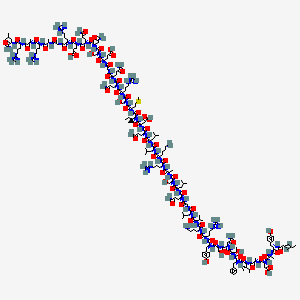
| Molecular Formula | C221H366N72O67S |
| Molecular Weight | ≈ 5135.9 g/mol |
| Physical Appearance | White to off-white lyophilized powder |
| Container | 3 mL glass vial (5 mg net content) |
| Purity | ≥ 99% verified by HPLC & MS |
| Solubility | Soluble in sterile water or compatible buffer; gently invert until dissolved; filter-sterilize if needed |
Molecular Structure
Storage & Handling
Lyophilized Storage: Store unopened vials at ≤ 6 °C (refrigerated), sealed, away from heat, light, and moisture.
For long-term storage, ≤ −20 °C is recommended.
After Reconstitution: Prepare sterile aliquots in buffer; store at ≤ −20 °C.
Avoid repeated freeze–thaw cycles to maintain peptide integrity.
- Use sterile technique and aseptic conditions.
- Allow vial to warm to room temperature before opening to minimize condensation.
- Dissolve gently — do not vortex aggressively.
- Filter-clarify if using in sterile cell culture systems.
Research Applications
(Strictly in-vitro, cellular, or biochemical contexts — no clinical or human-use claims.)
- GH release modeling: Used to stimulate growth hormone secretion in pituitary culture and perfusion systems.
- Endocrine regulation assays: Useful for analyzing hypothalamo-pituitary receptor pharmacology and feedback loops.
- Metabolic signaling studies: Applied in models examining lipid metabolism and endocrine crosstalk.
- Peptide stability comparisons: Explored in receptor-binding and degradation resistance assays.
Citations
- Grunfeld, C., et al. “Effects of Tesamorelin, a Growth Hormone–Releasing Factor Analog, in HIV-Infected Patients with Abdominal Fat Accumulation.” Journal of Clinical Endocrinology & Metabolism, vol. 92, no. 11, 2007, pp. 4265–4273. PubMed
- Falutz, J., et al. “Metabolic Effects of a Growth Hormone–Releasing Factor in Patients with HIV.” New England Journal of Medicine, vol. 357, no. 23, 2007, pp. 2359–2370. PubMed
- Allas, S., et al. “Long-Term Safety and Effects of Tesamorelin, a Growth Hormone-Releasing Factor Analog, in HIV-Infected Patients with Abdominal Fat Accumulation.” Journal of Acquired Immune Deficiency Syndromes, vol. 53, no. 3, 2010, pp. 311–322. PubMed
- Engelson, E. S., et al. “Body Composition and Metabolic Effects of Tesamorelin in Non–HIV Adults with Abdominal Obesity.” Obesity, vol. 24, no. 6, 2016, pp. 1176–1183. PubMed
- Fleseriu, M., et al. “Endocrine and Metabolic Effects of Tesamorelin, a Synthetic Growth Hormone–Releasing Factor, in Healthy Volunteers.” Journal of Clinical Pharmacology, vol. 49, no. 6, 2009, pp. 697–707. PubMed
Compliance & RUO Disclaimer
For laboratory research use only (RUO). Not for human or veterinary use, ingestion, diagnostic, or therapeutic applications.
Buyers must be qualified researchers operating under institutional guidelines.
Related Products
Browse more in Peptides.
Always read the label and use products as directed. Consult a qualified professional where appropriate.
Related products