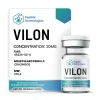



Vilon 20mg
$39.95
Vilon 20 mg from Peptide Tech Solutions is a high-purity bioregulator that meets your research needs. This synthetic dipeptide, with a minimal L-lysyl-L-glutamyl sequence, is perfect for in-vitro studies in chromatin biology and peptide analytics. Each vial is supplied with ≥99% purity, ensuring you get reliable results in your applications. Order now to enhance your research capabilities!
Overview
Vilon 20 mg (KE; Lys–Glu) from Peptide Tech is a lyophilized, research-use-only (RUO) dipeptide supplied at ≥99% purity (HPLC & MS verified). This minimal L-lysyl-L-glutamyl sequence is packaged for precise in-vitro work in chromatin biology, cytokine gene-expression models, and peptide analytics where documentation, batch traceability, and cold-chain integrity matter.
Specifications
| Property | Details |
|---|---|
| Product Type | Synthetic dipeptide (lyophilized powder) |
| Chemical Name | N-L-Lysyl-L-glutamic acid |
| Synonyms | Vilon; Lysylglutamic acid; Lys-Glu; H-Lys-Glu-OH; “KE” |
| Sequence | Lys-Glu (K-E) |
| CAS Number | 45234-02-4 |
| PubChem CID | 7010502 |
| Molecular Formula | C11H21N3O5 |
| Molecular Weight | ≈ 275.30 g/mol |
| Appearance | White to off-white lyophilized powder |
| Content per Vial | 20 mg |
| Container | 3 mL Type I glass vial |
| Purity / Identity | ≥99% by HPLC; identity by MS (batch COA via on-vial QR) |
| Solubility | Freely soluble in sterile water or neutral aqueous buffers; a brief pre-wet with ≤0.1% acetic acid can aid rapid dissolution. If your SOP requires sterility, 0.22 µm filter after reconstitution. |
| Intended Use | Laboratory research only (RUO). Not for human or animal use. |
Molecular Structure

Key Features of Peptide Tech
- Same-Day Shipping (Mon–Fri, on in-stock items)
- GMP-Aligned lyophilization & documentation
- USA Made
- 24/7 Support
- Price Match Guarantee
- Batch Tracking with on-vial QR verification
- 3rd-Party U.S. Lab Testing — purity, quantity, endotoxin
- Cold-Chain Shipping — Always (no paid upgrade)
- Worldwide Shipping
- All Major Payments Accepted
- Text & Email Order Updates
- 2-Day FedEx/UPS Standard with low-cost overnight
- Largest Variety of peptides & bioregulators
Potential Applications in Research
Strictly for in-vitro, cell-based, or biochemical experiments. No health, diagnostic, or therapeutic claims.
- Chromatin state assays in lymphocytes — evaluate facultative/structural heterochromatin dynamics (e.g., DAPI densitometry, NOR silver staining, immunocytochemistry) in cultured human lymphocytes under defined conditions. :contentReference[oaicite:0]{index=0}
- IL-2 gene-expression models — quantify peptide-driven changes in Il2 mRNA in mouse splenocytes (qPCR), including time-/dose-responses and promoter-reporter readouts. :contentReference[oaicite:1]{index=1}
- Pathway mapping around IL-2 signaling — pair IL-2 transcription readouts with downstream pathway markers (e.g., STAT5 phosphorylation) to contextualize responses in controlled media. (Background review support.) :contentReference[oaicite:2]{index=2}
- Peptide-transporter (PepT1) uptake screens — use heterologous systems or cell lines expressing SLC15A1 to profile charged dipeptide handling and structure–activity determinants. (General transporter methodology.) :contentReference[oaicite:3]{index=3}
- Analytical method development — RP-HPLC/LC–MS/MS workflows for identity, stability, recovery, and matrix effects across buffers and temperatures; establish assay-ready reference material and retention/fragmentation anchors (per COA).
Citations (MLA)
- Lezhava, Teimuraz, et al. “Bioregulator Vilon-Induced Reactivation of Chromatin in Cultured Lymphocytes from Old People.” Biogerontology, vol. 5, no. 2, 2004, pp. 73–79. https://doi.org/10.1023/B:BGEN.0000025070.90330.7f. :contentReference[oaicite:4]{index=4}
- Khavinson, V. Kh., et al. “Effect of Peptide Lys-Glu on Interleukin-2 Gene Expression in Lymphocytes.” Bulletin of Experimental Biology and Medicine, vol. 130, no. 3, 2000, pp. 898–899. https://doi.org/10.1007/BF02682264. :contentReference[oaicite:5]{index=5}
- Korneva, E. A., et al. “In Vitro Effect of Short Peptides on Expression of Interleukin-2 Gene in Splenocytes of CBA Mice.” Bulletin of Experimental Biology and Medicine, vol. 133, 2002, pp. 186–188. https://doi.org/10.1023/A:1020210615148. :contentReference[oaicite:6]{index=6}
- Boyman, Onur, and Jonathan Sprent. “The Role of Interleukin-2 in Immunity and Tolerance.” Trends in Immunology, vol. 33, no. 7, 2012, pp. 371–377. Link. (Background for IL-2 pathway assays.) :contentReference[oaicite:7]{index=7}
- Verri, T., et al. “The Teleost PepT1-Type Peptide Transporters and Their Specificity.” Frontiers in Physiology, 2023. Link. (General transporter methodology context.) :contentReference[oaicite:8]{index=8}
Quality, Storage & Handling
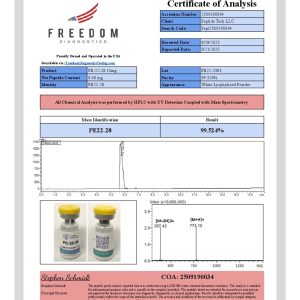
Every lot is confirmed by HPLC (purity) and MS (identity); the on-vial QR links to the batch COA. Independent U.S. labs verify purity, quantity, and endotoxin.
- Storage (lyophilized): −20 °C long-term or 2–8 °C short-term; keep desiccated and protected from light.
- After reconstitution: Aliquot and store at ≤ −20 °C (or −80 °C per SOP); avoid repeated freeze–thaw cycles.
- Reconstitution tips: Use sterile water or compatible buffer; gently swirl/invert to dissolve. If sterility is required, pass through a 0.22 µm filter and aliquot promptly.
Shipping & Fulfillment
Ships with validated cold-chain packaging. In-stock orders placed before the daily cutoff ship the same day. 2-Day FedEx/UPS is standard, with overnight options available. Automated text/email updates included; international shipping available where permitted.
Compliance & RUO Disclaimer
For laboratory research only. Not a drug, cosmetic, food, or household chemical. Not for human or animal use, ingestion, diagnostic, or therapeutic applications. Buyers warrant they are qualified to handle RUO materials under applicable laws and institutional guidelines.
FAQs
- Is Vilon the same as Thymogen?
- No. Vilon is the dipeptide Lys-Glu (KE), whereas Thymogen is Glu-Trp (EW). Verify the exact sequence required by your assay.
- What purity do you provide?
- Each 20 mg vial is ≥99% by HPLC with MS identity confirmation; third-party testing is performed on every lot (COA via on-vial QR).
- How should I reconstitute it?
- Dissolve in sterile water or compatible buffer; gently invert until fully dissolved. If your SOP requires sterility, 0.22 µm filter and aliquot to avoid repeat freeze–thaw.
- Which in-vitro assays are common?
- Typical RUO uses include chromatin-state readouts in lymphocytes, IL-2 mRNA reporter/qPCR experiments, and general HPLC/LC–MS method development, with optional PepT1 uptake panels for charged dipeptides.
Explore More
Browse additional research peptides and accessories at Peptide Tech.
Related Products
Browse more in Bioregulators.
Always read the label and use products as directed. Consult a qualified professional where appropriate.
Related products