$49.95
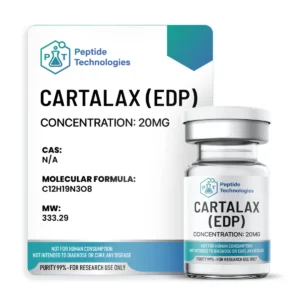
Cortagen (Ala-Glu-Asp-Pro; “AEDP”) from Peptide Tech is a lyophilized, ultra-short research peptide manufactured for reproducible in-vitro, cellular, and biochemical studies. With batch-linked COAs and third-party verification, this ≥99% purity tetrapeptide supports rigorous assays exploring gene-expression modulation, neurite biology, oxidative-stress signaling, and peptide–protein interactions under controlled laboratory conditions.
Specifications
| Property | Details |
|---|---|
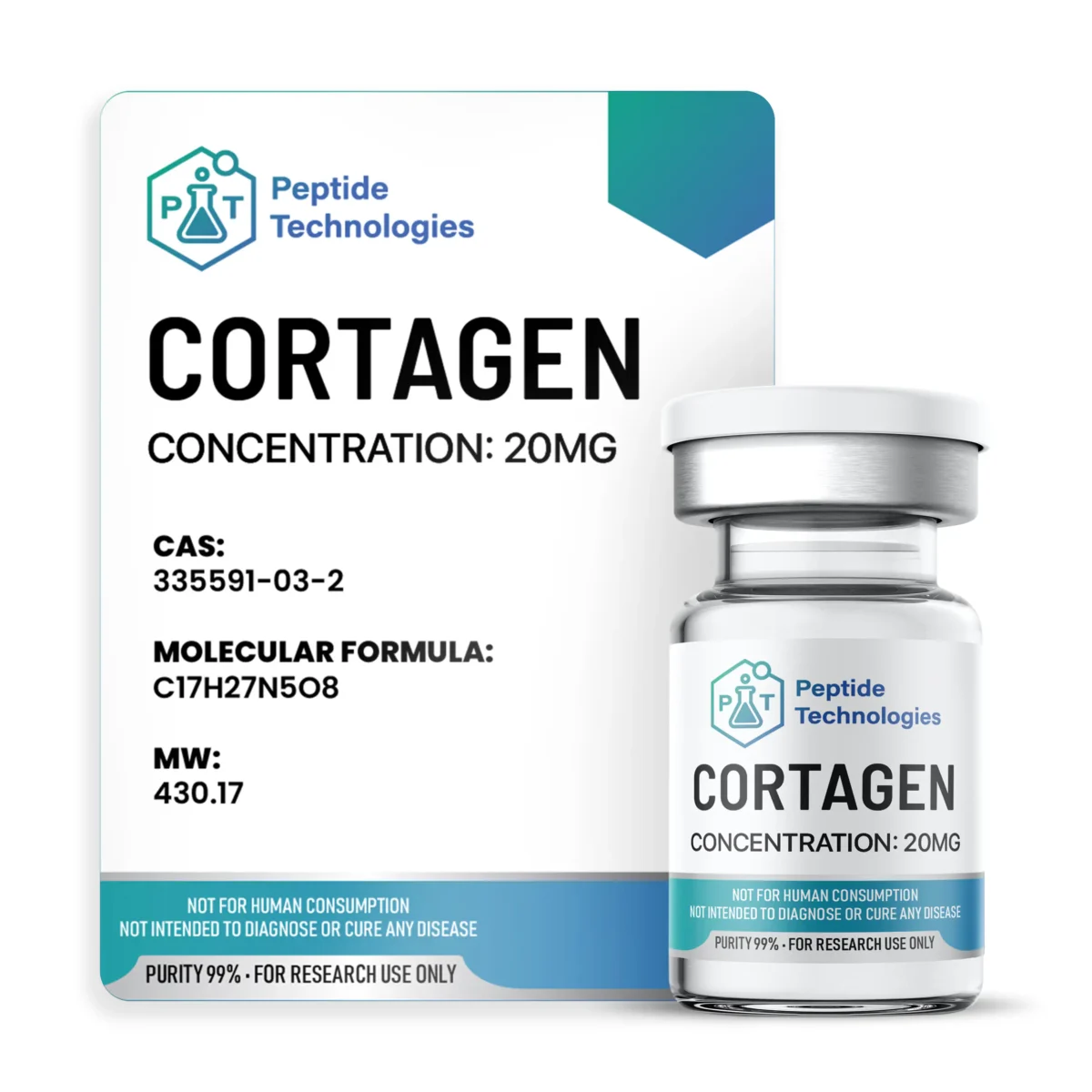
| Product | Cortagen (AEDP) — 20 mg |
| Chemical Name | H-Ala-Glu-Asp-Pro-OH |
| Sequence | Ala-Glu-Asp-Pro (AEDP) |
| CAS Number | 335591-03-2. Reference |
| Molecular Formula | C17H26N4O9 |
| Molecular Weight | ~430.41 g/mol (avg); 430.17 Da (monoisotopic). Calculated reference |
| Appearance | White to off-white lyophilized powder |
| Content | 20 mg per vial |
| Container | 3 mL Type I glass vial, butyl stopper, flip-off seal |
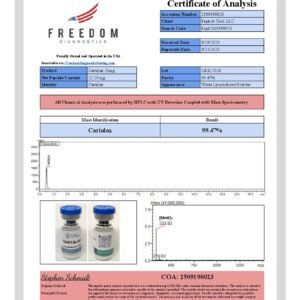
| Purity / ID | ≥99% by HPLC; identity by MS. Lot COA via on-vial QR |
| Solubility | Water; aqueous buffers (e.g., PBS). For low-µM stocks, consider 0.1% carrier (BSA) to minimize adsorption |
| Storage (lyo.) | −20 °C (long-term) or 2–8 °C (short-term); protect from light & moisture |
| After Reconstitution | Aliquot; store ≤−20 °C; avoid repeated freeze-thaw |
| Intended Use | Research Use Only (RUO). Not for human or animal use |
Molecular Structure
Cortagen is a defined tetrapeptide (H-Ala-Glu-Asp-Pro-OH). A canonical PubChem compound page for AEDP is not consistently indexed. For a line-formula/IUPAC representation and calculated properties:
See ChemSpider and supplier monographs:
ChemSpider,
BOC Sciences
Key Features — Peptide Tech
- Same-Day Shipping on in-stock items
- GMP-Aligned production & documentation
- USA-Made lyophilized peptides
- 24/7 Support & Price Match guarantee
- Batch QR for COA / chain-of-custody verification
- Certified 3rd-Party U.S. Labs: purity, quantity, endotoxin
- Cold-Chain Shipping — Always (no paid upgrade)
- Worldwide Shipping; all major payments accepted
- Text/Email order updates; 2-Day FedEx/UPS standard & low-cost overnight
- Largest Variety of peptides & bioregulators
Potential Applications in Research (RUO)
Strictly for laboratory research. No health, diagnostic, or therapeutic claims are made or implied.
- Transcriptome-level modulation assays: Use AEDP in cell or tissue models with cDNA microarray / RNA-seq follow-up to profile differentially expressed genes (e.g., mitochondrial, signaling, stress-response). :contentReference[oaicite:0]{index=0}
- Neurite outgrowth & axon biology: Evaluate effects on neurite extension, growth-cone dynamics, or conduction markers in neuron-like cells or ex vivo explants (e.g., DRG), informed by prior sciatic-nerve regeneration studies. :contentReference[oaicite:1]{index=1}
- Oxidative-stress & mitochondrial panels: Quantify ROS, ΔΨm, and expression of ETC genes (e.g., COX3, ND5) under defined stressors to map AEDP-linked pathways. :contentReference[oaicite:2]{index=2}
- Inflammation/cytokine readouts: In glial or mixed neuro-immune co-cultures, measure cytokine profiles and signaling nodes to assess pathway directionality in vitro. :contentReference[oaicite:3]{index=3}
- Chromatin/epigenetic screens: Explore chromatin accessibility or heterochromatin marks (e.g., ATAC-seq, H3K9me3 IF) to test short-peptide impacts on nuclear organization suggested for bioregulators. :contentReference[oaicite:4]{index=4}
Citations (MLA)
- Anisimov, Sergey V., Vladimir Kh. Khavinson, and Vladimir N. Anisimov. “Elucidation of the Effect of Brain Cortex Tetrapeptide Cortagen on Gene Expression in Mouse Heart by Microarray.” Neuroendocrinology Letters, vol. 25, no. 1–2, 2004, pp. 87–93. PubMed: 15159690. Link. :contentReference[oaicite:5]{index=5}
- Turchaninova, A., et al. “Effect of Tetrapeptide Cortagen on Regeneration of Sciatic Nerve.” Neuroscience and Behavioral Physiology, Springer, 2001. Link. :contentReference[oaicite:6]{index=6}
- Khavinson, V. Kh., et al. “Epigenetic Regulation of ‘Aged’ Heterochromatin by Short Peptides.” The Protein Journal, 2014. Link. :contentReference[oaicite:7]{index=7}
Quality, Handling & Safety
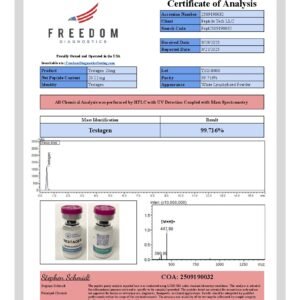
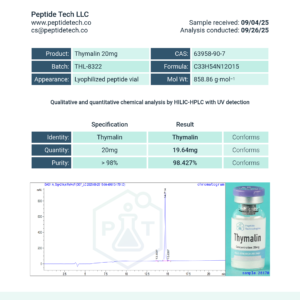
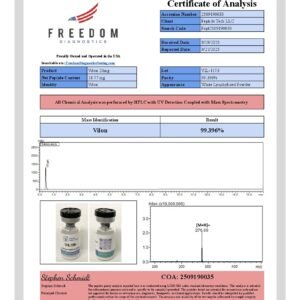
- Verification: Each lot is tested by independent U.S. labs for purity, quantity, and endotoxin; results are accessible via the QR on the vial label.
- Reconstitution: Use sterile water or a suitable buffer; for working stocks, include an inert carrier (e.g., 0.1% BSA) when adsorption is a concern.
- Aliquoting: Prepare single-use aliquots; avoid freeze–thaw cycles.
Shipping & Fulfillment
Orders ship in validated cold-chain packaging. In-stock vials ship the same business day before cutoff. 2-Day FedEx/UPS is standard; discounted overnight is available. International shipping offered where permitted; automated text/email status updates included.
Compliance & RUO Disclaimer
This material is supplied for laboratory research only. It is not a drug, food, or cosmetic; not for human or animal administration, diagnostic use, or therapeutic use. Purchaser warrants appropriate qualifications and compliance with all applicable regulations and institutional policies.
FAQs
- Is Cortagen the same as Cortexin?
- No. Cortexin is a heterogeneous protein extract; Cortagen is a defined tetrapeptide (AEDP) synthesized by SPPS and characterized by HPLC/MS. :contentReference[oaicite:8]{index=8}
- What documentation comes with each vial?
- Every vial is linked to a COA via on-label QR code, including identity (MS), purity (HPLC), quantity, endotoxin, and storage guidance.
- How should I design in-vitro work with AEDP?
- Start with concentration-response curves in your system, include vehicle controls, and measure pre-specified endpoints (e.g., RNA-seq, ROS, neurite metrics) with appropriate replicates and statistics. See the cited microarray and regeneration literature for model selection. :contentReference[oaicite:9]{index=9}
Related products