

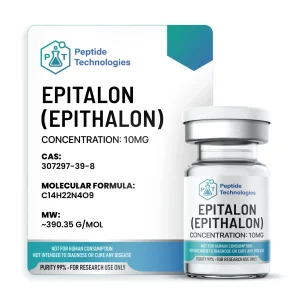
Epitalon 10mg
$24.95
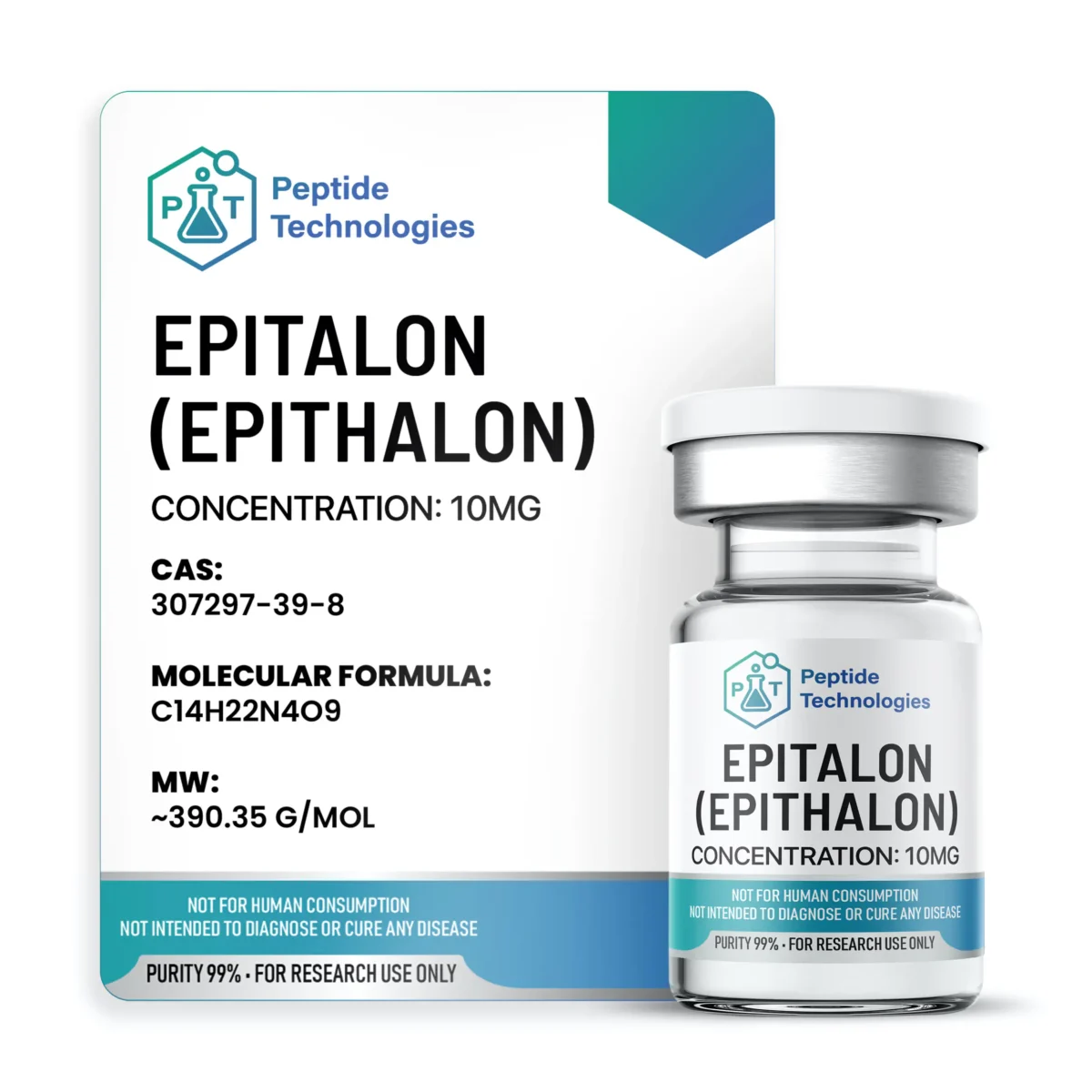
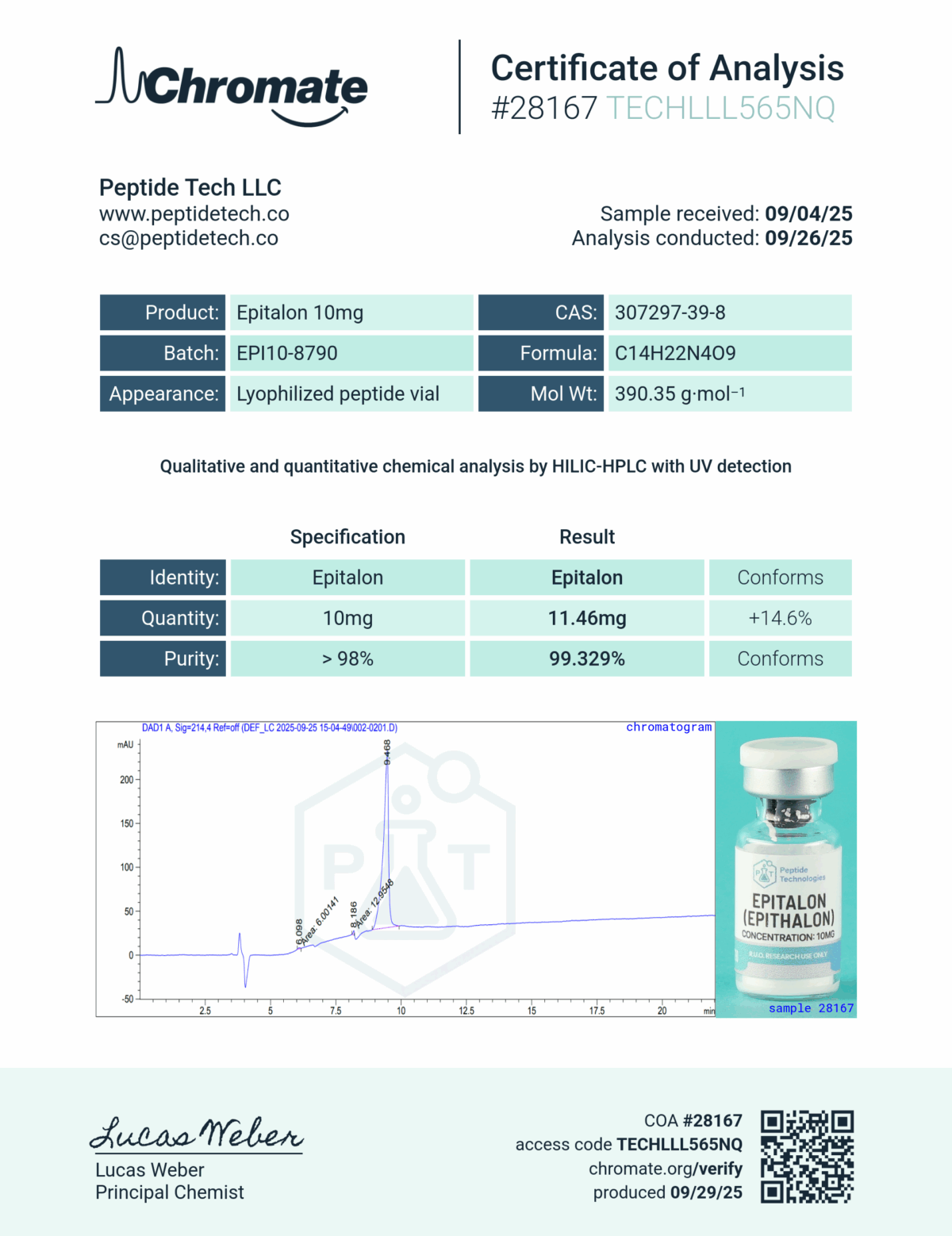
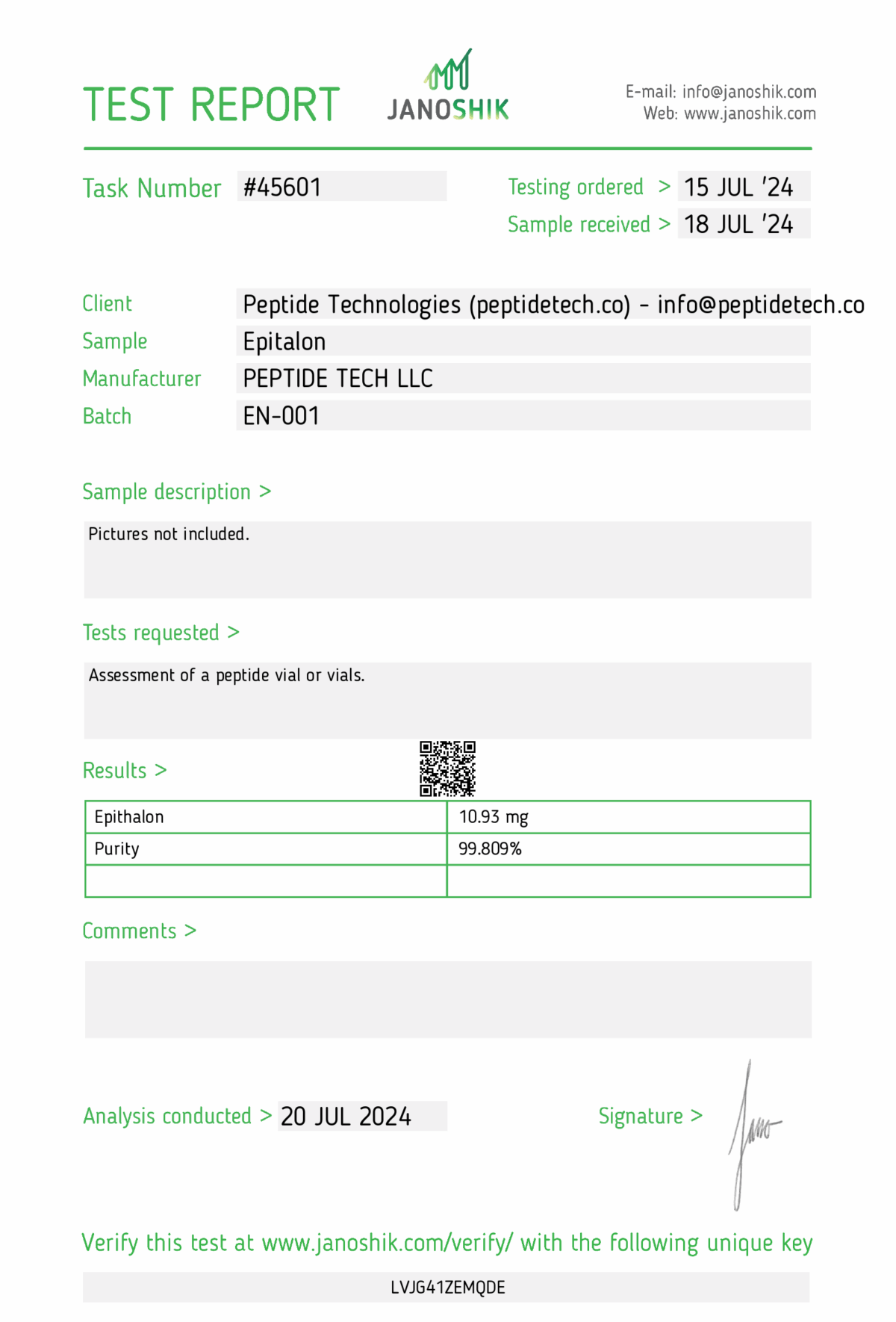
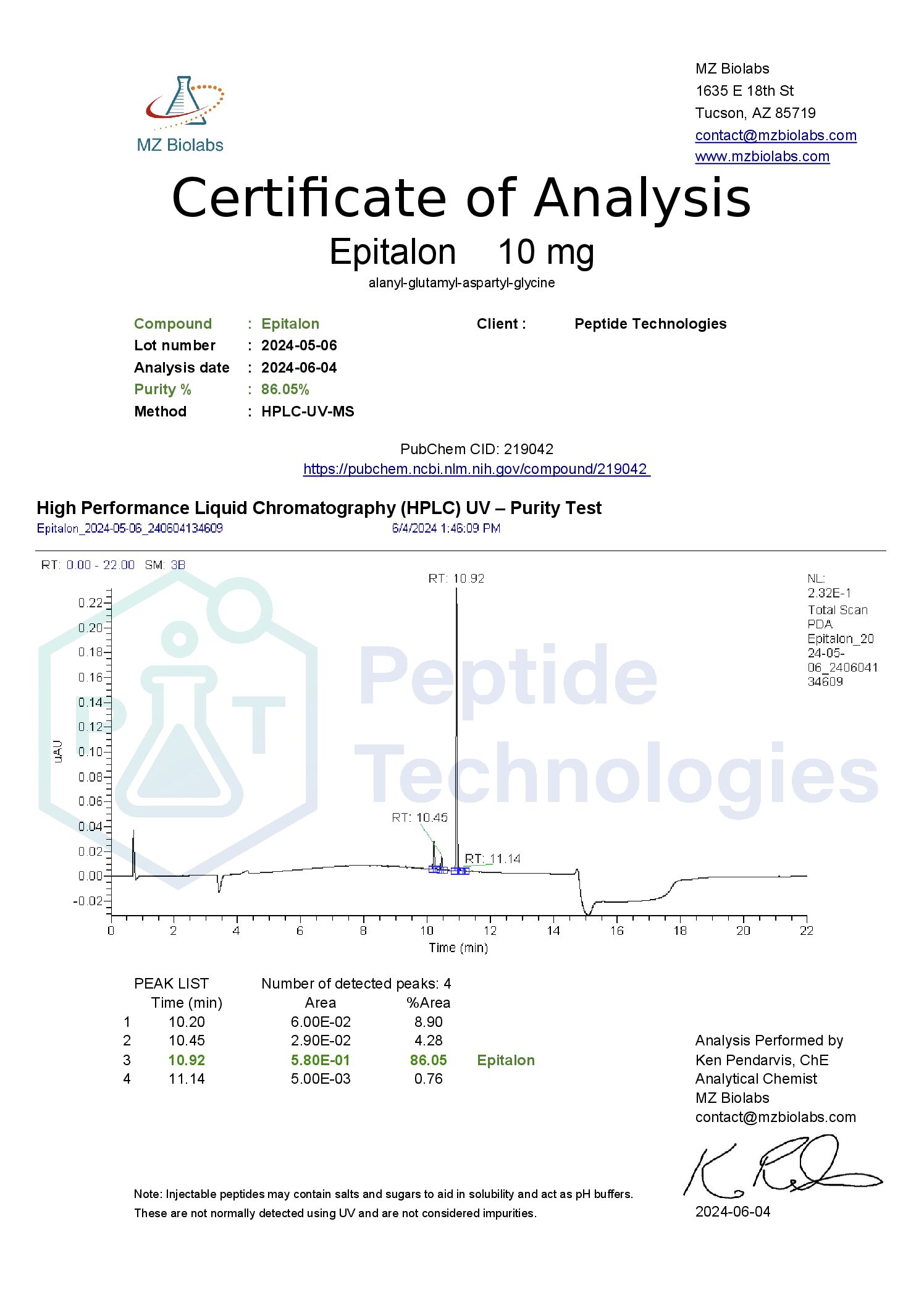
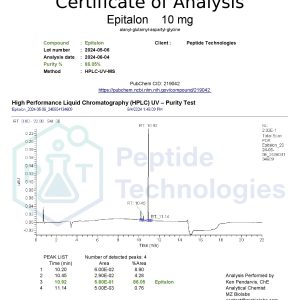
Epitalon 10 mg, a synthetic tetrapeptide (Ala, Glu, Asp, Gly), is available at Peptide Tech Solutions with ≥ 99% purity (HPLC/MS verified). Tailored for in-vitro, cellular, and biochemical research, this peptide is crucial for studying telomerase activity and telomere biology. Enhance your research projects with Epitalon, designed to support precise pathway mapping and assay validation.
Epitalon (Epithalon, AEDG) 10 mg is a synthetic tetrapeptide with the sequence Ala–Glu–Asp–Gly, supplied by Peptide Tech at ≥ 99% purity (HPLC/MS verified) for in-vitro, cellular, and biochemical research use only (RUO). In controlled lab systems, Epitalon is frequently employed to probe telomerase/telomere biology, chromatin/heterochromatin state, and fibroblast ECM signaling, enabling reproducible pathway mapping and assay validation.
Specifications
| Property | Details |
|---|---|
| CAS Number | 307297-39-8 |
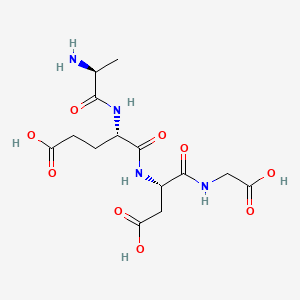
| Chemical Name | H-Ala-Glu-Asp-Gly-OH (Epitalon / Epithalon / AEDG) |
| PubChem CID | CID 219042 |
| Molecular Formula | C14H22N4O9 |
| Molecular Weight | ≈ 390.35 g/mol |
| Sequence | Ala–Glu–Asp–Gly (AEDG) |
| Physical Appearance | White to off-white lyophilized powder |
| Container | 3 mL glass vial (10 mg net content) |
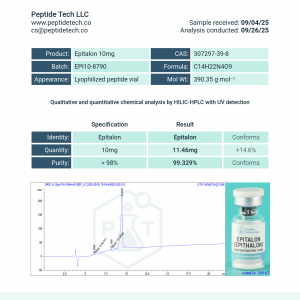
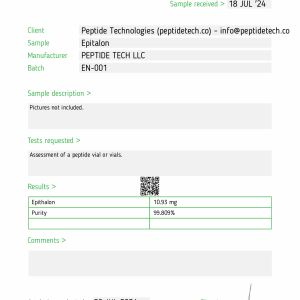
| Purity | ≥ 99% verified by HPLC & MS |
| Solubility | Soluble in sterile water or compatible aqueous buffer; gently invert until dissolved; filter-sterilize (0.22 µm) if required by your method |
Molecular Structure
Storage & Handling
Lyophilized (unopened): Store at ≤ −20 °C in a dry, dark environment. For short-term staging, 2–8 °C is acceptable if the vial remains sealed.
After reconstitution: Prepare sterile aliquots; store at ≤ −20 °C (≤ −80 °C recommended for extended periods). Avoid repeated freeze–thaw cycles.
Let the vial equilibrate to room temperature before opening to minimize condensation; mix by gentle inversion—avoid aggressive vortexing.
Potential Applications in Research
Strictly in-vitro, cellular, or biochemical contexts — no clinical or human-use claims.
- Telomerase/telomere assays: Evaluate hTERT expression and TRAP activity in cultured human fibroblasts with telomere length readouts (e.g., qPCR, Southern blot–based TRF).
- Replicative senescence models: Use population-doubling and β-gal assays to study AEDG effects on Hayflick-limit–adjacent phenotypes under controlled conditions.
- Chromatin state profiling: Assess heterochromatin decondensation in lymphocyte cultures (e.g., C-banding, rDNA activity markers) and pair with epigenetic reporter readouts.
- Fibroblast ECM signaling: Quantify MMP-9 and related markers (Ki-67, CD98hc, caspase-3) in aging dermal fibroblast models via IF/ICW or ELISA workflows.
- Analytical identity & stability controls: Use PubChem CID and exact sequence to validate LC-MS/HPLC methods and track lot-to-lot comparability.
Citations
- Khavinson, V. Kh., I. E. Bondarev, and A. A. Butyugov. “Epithalon Peptide Induces Telomerase Activity and Telomere Elongation in Human Somatic Cells.” Bulletin of Experimental Biology and Medicine, vol. 135, no. 6, 2003, pp. 590–592.
PubMed /
Europe PMC - Khavinson, V., et al. “Peptide Epitalon Activates Chromatin at the Old Age.” Neuro Endocrinology Letters, vol. 24, no. 5, 2003, pp. 329–333.
PubMed - Lin’kova, N. S., et al. “Peptide Regulation of Skin Fibroblast Functions during Their Aging In Vitro.” Bulletin of Experimental Biology and Medicine, vol. 161, no. 1, 2016, pp. 175–178.
Europe PMC /
Springer - Wałajtys-Rode, E., et al. “Overview of Epitalon—Highly Bioactive Pineal Tetrapeptide with Multiple Biological Effects.” International Journal of Molecular Sciences, vol. 26, no. 6, 2025, 2691.
Article
Compliance & RUO Disclaimer
For laboratory research use only (RUO). Not for human or veterinary use, ingestion, diagnostic, or therapeutic applications.
Purchase and use are limited to qualified personnel operating under institutional laboratory guidelines.
Related Products
Browse more in Peptides.
Always read the label and use products as directed. Consult a qualified professional where appropriate.
Related products