

AOD-9604 5mg
$38.99
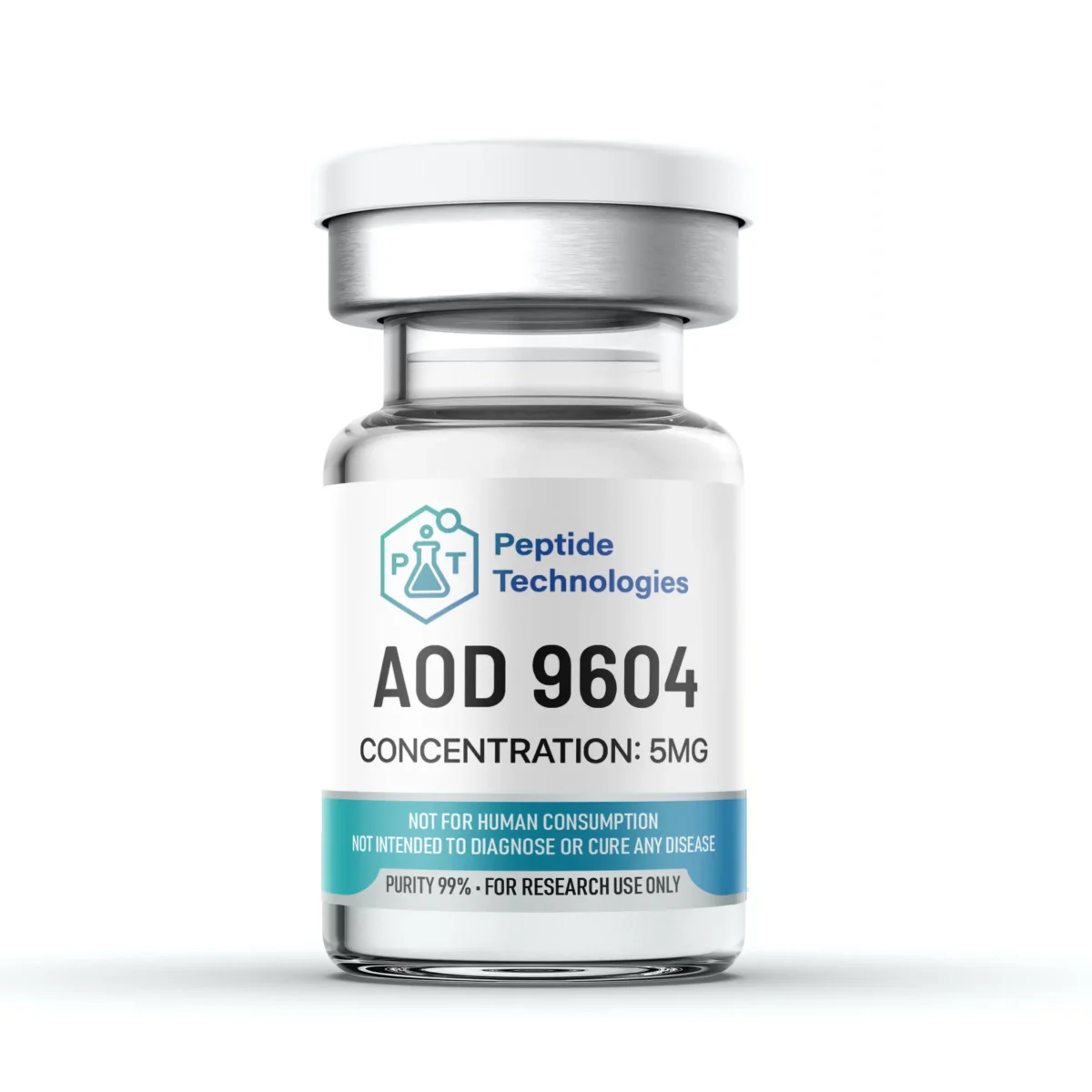
Explore AOD-9604 5 mg, a synthetic hexadecapeptide derived from the C-terminus of human growth hormone. With ≥ 99% purity, it’s ideal for research into lipid metabolism and peptide stability. Ensure your research is backed by high-quality compounds from Peptide Tech Solutions.
Overview
AOD-9604 5 mg is a synthetic hexadecapeptide derived from the C-terminus of human growth hormone (hGH), supplied by
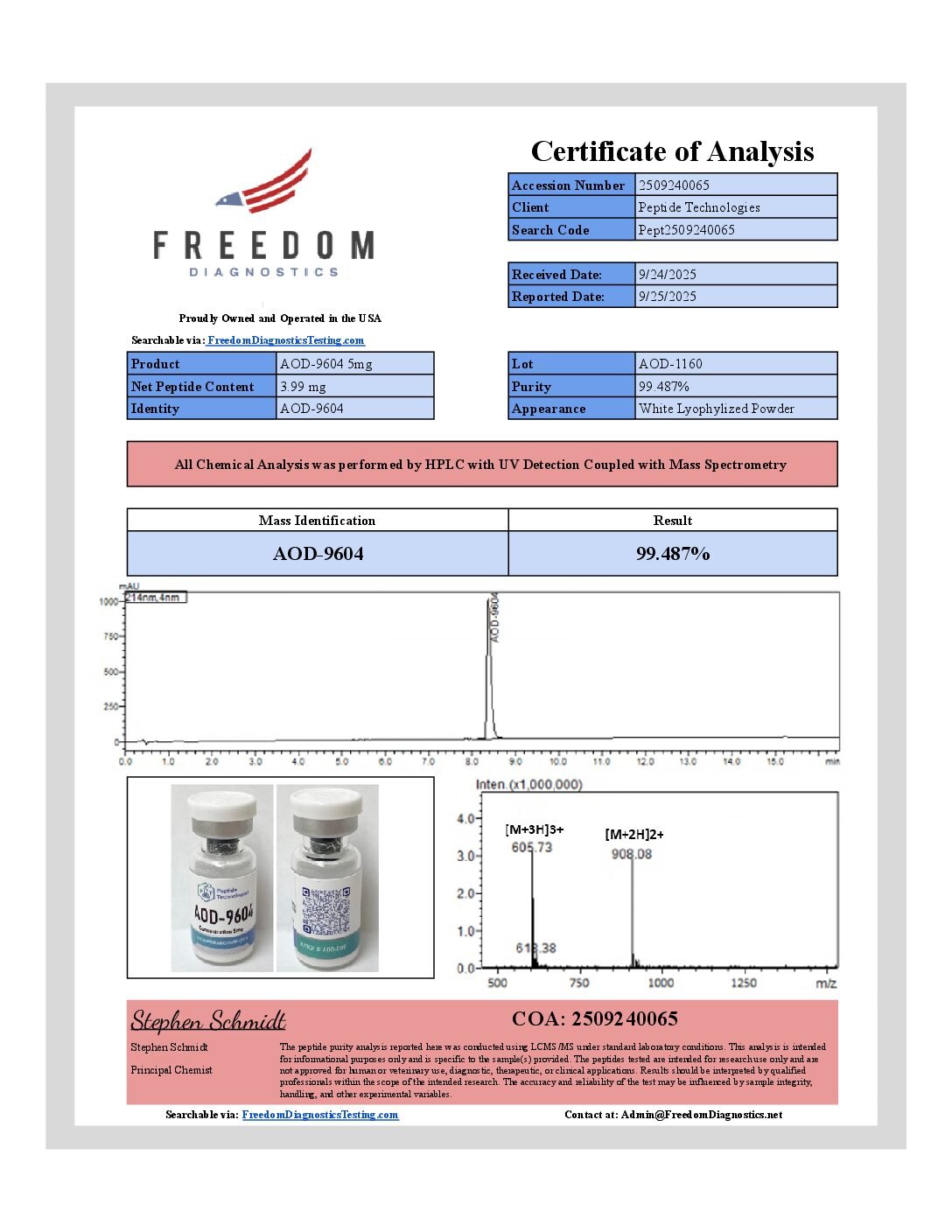
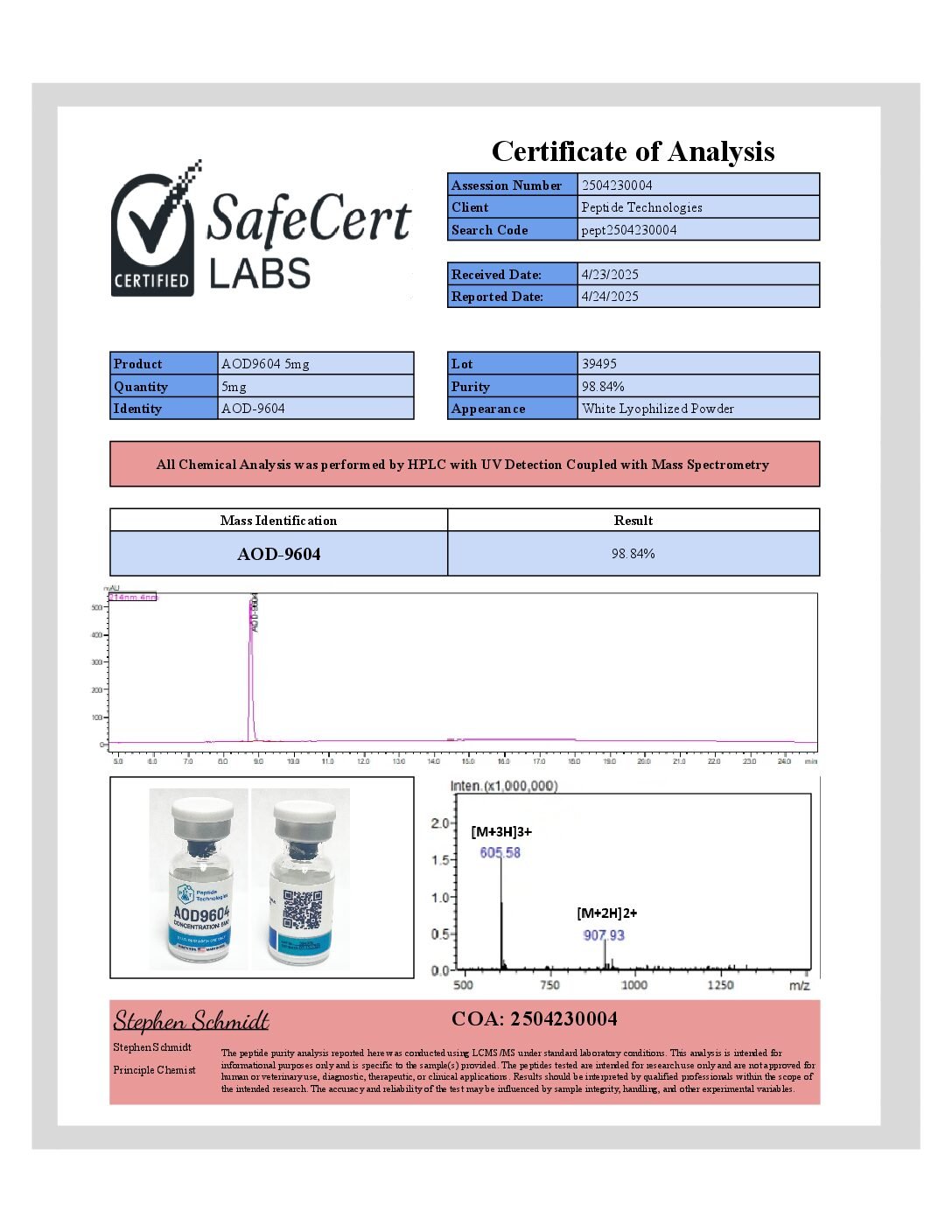
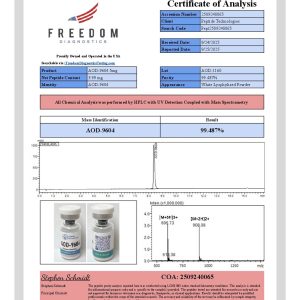
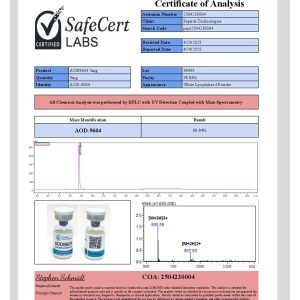
Peptide Tech at ≥ 99% purity (HPLC/MS verified) for in-vitro, cellular, and biochemical research use only (RUO). In controlled lab models, AOD-9604 is used to interrogate lipid-metabolism pathways, β-adrenergic–linked signaling, and peptide stability for analytical method development.
Specifications
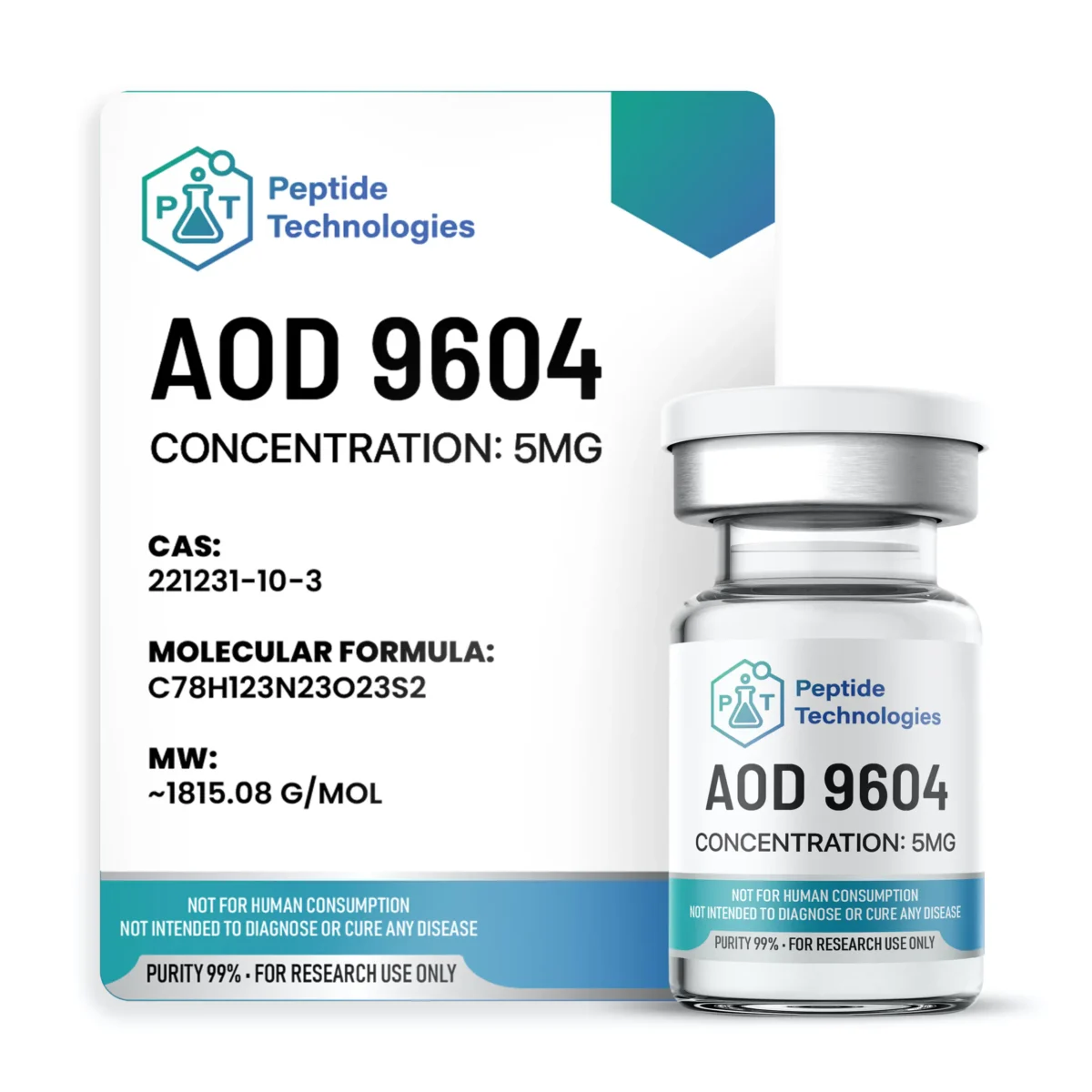
| CAS Number | 221231-10-3 |
| Chemical Name | AOD-9604 (hGH C-terminal analog) |
| PubChem CID | CID 71300630 |
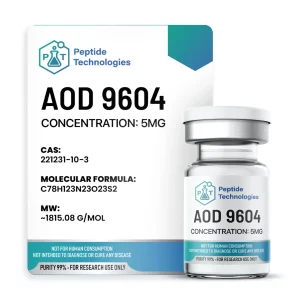
| Molecular Formula | C78H123N23O23S2 |
| Molecular Weight | ≈ 1,815.1 g/mol |
| Sequence | Tyr-Leu-Arg-Ile-Val-Gln-Cys-Arg-Ser-Val-Glu-Gly-Ser-Cys-Gly-Phe (disulfide Cys7↔Cys14) |
| Physical Appearance | White to off-white lyophilized powder |
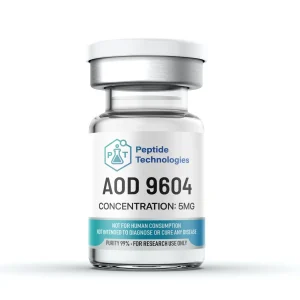
| Container | 3 mL glass vial (5 mg net content) |
| Purity | ≥ 99% (verified by HPLC & MS; third-party tested) |
| Solubility | Soluble in sterile water or compatible aqueous buffer; gently swirl to dissolve; 0.22 µm filter-sterilize if required |
Molecular Structure

Why Peptide Tech
- Same-Day Shipping
- GMP-Aligned Lyophilized Peptides
- USA Made
- 24/7 Support
- Price Match Guarantee
- Batch Tracking with QR Code Verification
- 3rd-Party USA Lab Testing — purity, quantity, endotoxin
- Cold-Chain Shipping — Always (no paid upgrade)
- Worldwide Shipping
- All Major Payments Accepted
- Text & Email Order Updates
- 2-Day FedEx/UPS Shipping Standard
- Cheapest Overnight Rates
- Largest Variety of Peptides & Bioregulators
Storage & Handling
- Lyophilized (unopened): Store at ≤ −20 °C, protected from light and moisture. For long-term archival, ≤ −80 °C is recommended.
- After reconstitution: Aliquot immediately to avoid repeated freeze–thaw; store at ≤ −80 °C (≤ −20 °C acceptable for short-term studies).
- General notes: Allow the vial to reach room temperature before opening to minimize condensation. Use sterile technique and compatible buffers; avoid strong acids/bases.
- Research Use Only (RUO): Not for human or veterinary use, ingestion, diagnostic, or therapeutic applications.
Potential Applications in Research
Strictly in-vitro, cellular, or biochemical contexts — no clinical or human-use claims.
- Adipocyte lipolysis/lipogenesis models: Quantify glycerol/FFA release and lipogenic markers in vitro or ex vivo.
Endocrinology, 2001. - β-Adrenergic pathway interrogation: Explore β3-AR–related mechanisms in rodent and cell systems.
Endocrinology, 2001. - Hepatocyte/adipocyte enzyme studies: Evaluate effects on lipogenic enzymes (e.g., ACC) and metabolic readouts.
Biochem Mol Biol Int, 1993. - Comparative peptide pharmacology: Contrast AOD-9604 with related hGH fragments in dose/response and stability workflows.
Am J Physiol Endocrinol Metab, 2000. - Pathway-level context (review): Situate findings within broader anti-obesity targets for hypothesis generation.
Clin Pharmacol Ther, 2010.
Citations (PubMed)
- Heffernan, M. A., et al. “The effects of human GH and its lipolytic fragment (AOD9604) on lipid metabolism following chronic treatment in obese mice and β3-AR knock-out mice.” Endocrinology 142(12), 2001, 5182–5189.
PubMed - Heffernan, M. A., Jiang, W. J., Thorburn, A. W., Ng, F. M. “Effects of oral administration of a synthetic fragment of human growth hormone on lipid metabolism.” Am J Physiol Endocrinol Metab 279(3), 2000, E501–E507.
PubMed - Wu, Z., Ng, F. M. “Antilipogenic action of synthetic C-terminal sequence 177–191 of human growth hormone.” Biochem Mol Biol Int 30(1), 1993, 187–196.
PubMed - Valentino, M. A., Lin, J., Waldman, S. A. “Central and peripheral molecular targets for anti-obesity pharmacotherapy.” Clin Pharmacol Ther 87(6), 2010, 652–662.
PubMed
Compliance & RUO Disclaimer
For laboratory research use only (RUO). Not a drug, food, or cosmetic. Not for human or veterinary use. Purchase and use are limited to qualified personnel operating under institutional laboratory guidelines.
Related Products
Browse more in Peptides.
Always read the label and use products as directed. Consult a qualified professional where appropriate.
Related products