


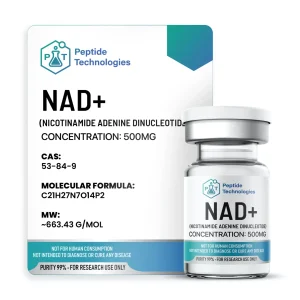



NAD+ 500mg
$49.99
NAD+ 500 mg from Peptide Tech Solutions is your premium choice for high-purity bioregulators. This lyophilized research-use-only reagent has a purity of ≥99%, verified by HPLC and MS. Widely utilized in redox biochemistry, enzyme kinetics, and metabolomics, it’s essential for ensuring reliable results in your experiments. Get NAD+ 500 mg now and enhance your workflow with this critical cofactor.
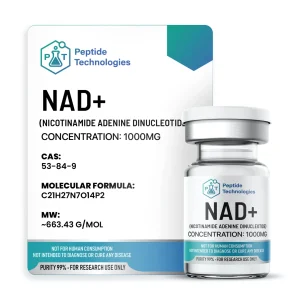
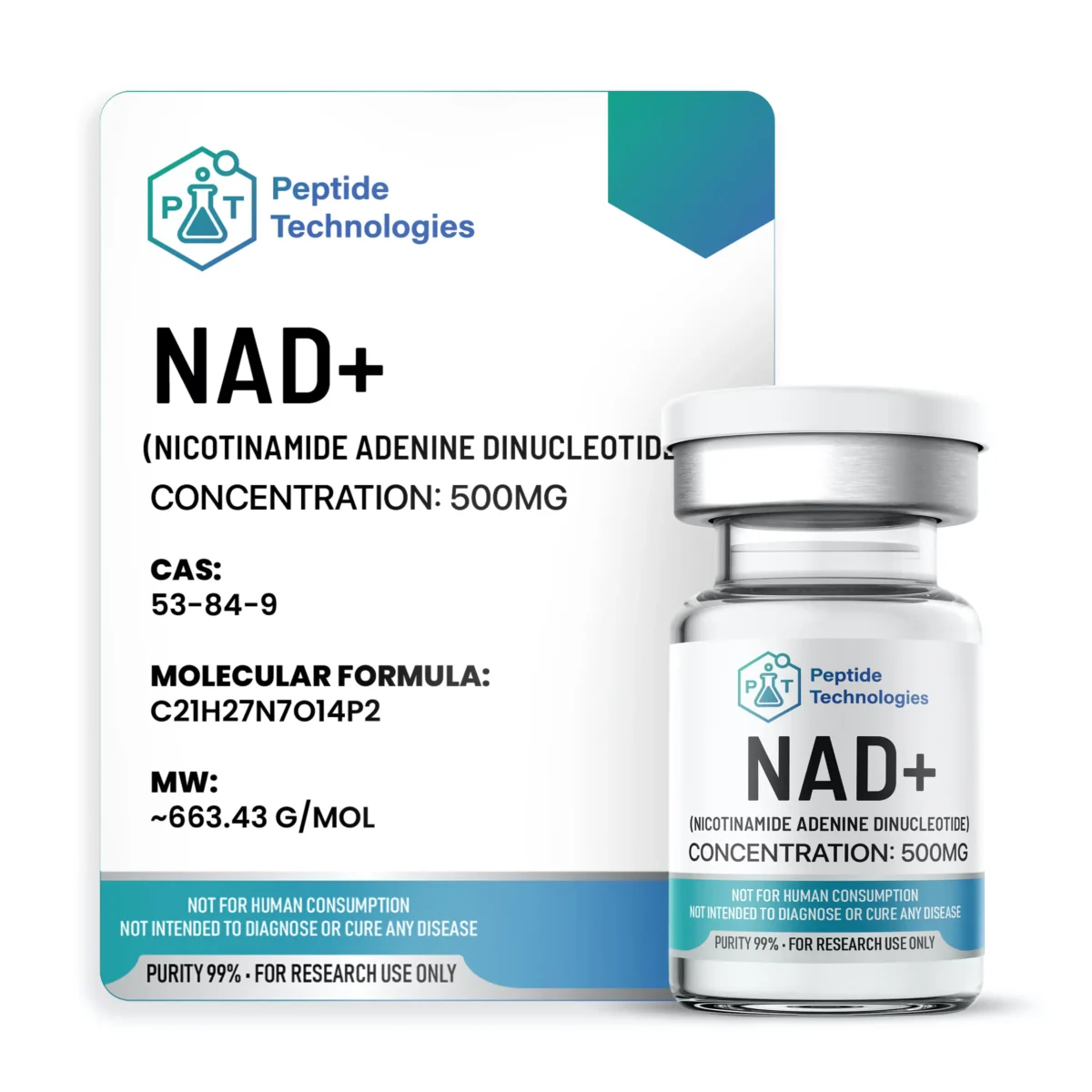
NAD+ 500 mg (β-Nicotinamide adenine dinucleotide; Nadide) from Peptide Tech is a premium, lyophilized research-use-only (RUO) reagent supplied at ≥99% purity (HPLC & MS verified). The oxidized dinucleotide cofactor is widely used in in-vitro redox biochemistry, enzyme kinetics, ADP-ribosylation workflows, and LC–MS metabolomics where identity, stability, and batch traceability are critical.
Specifications
| Property | Details |
|---|---|
| CAS Number | 53-84-9 |
| Chemical Name | β-Nicotinamide adenine dinucleotide (oxidized form); NAD+; Nadide |
| PubChem CID | 5892 |
| Molecular Formula | C21H27N7O14P2 |
| Molecular Weight | ≈ 663.43 g/mol |
| Physical Appearance | White to off-white lyophilized powder |
| Form | Oxidized dinucleotide cofactor (anhydrous) |
| Container | Glass vial (500 mg net content) |
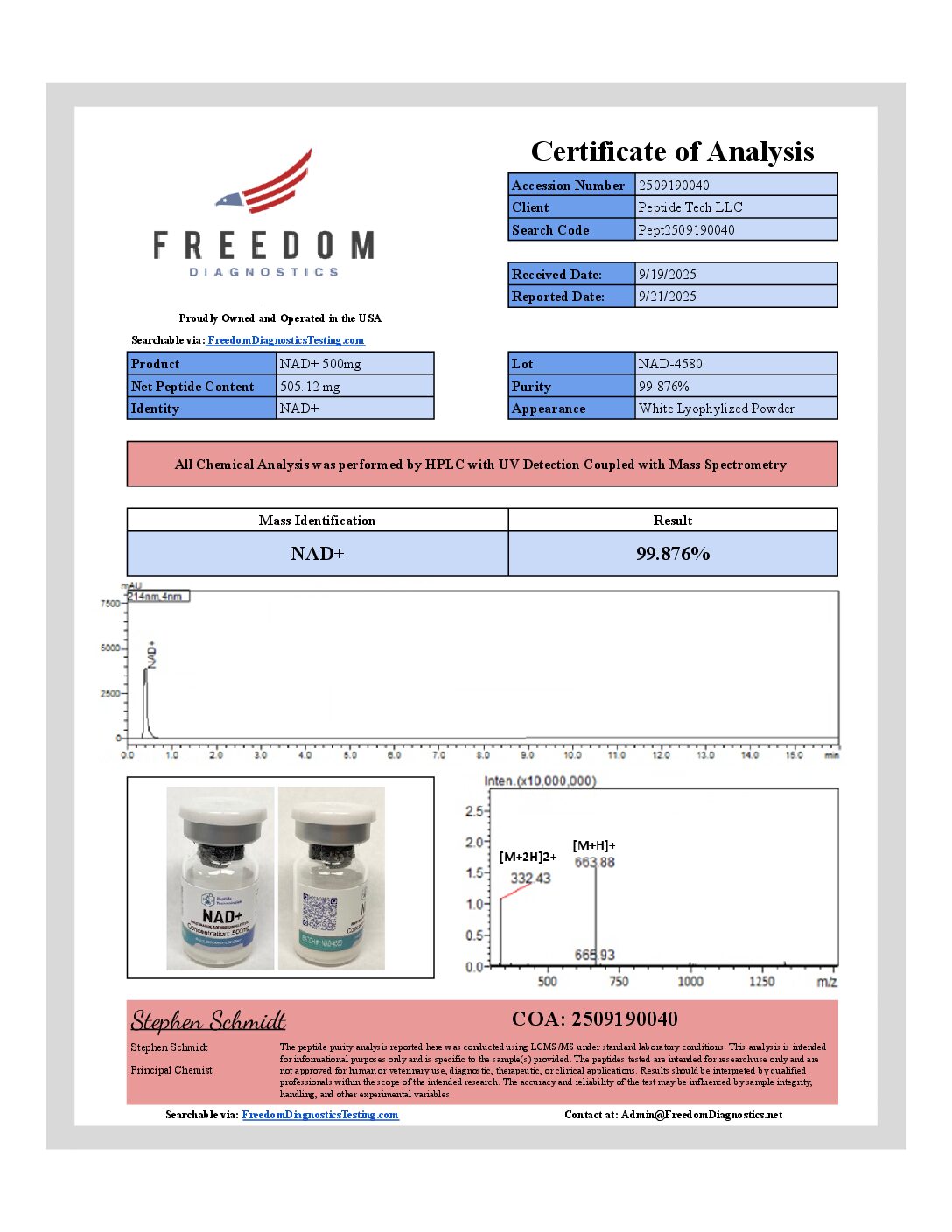
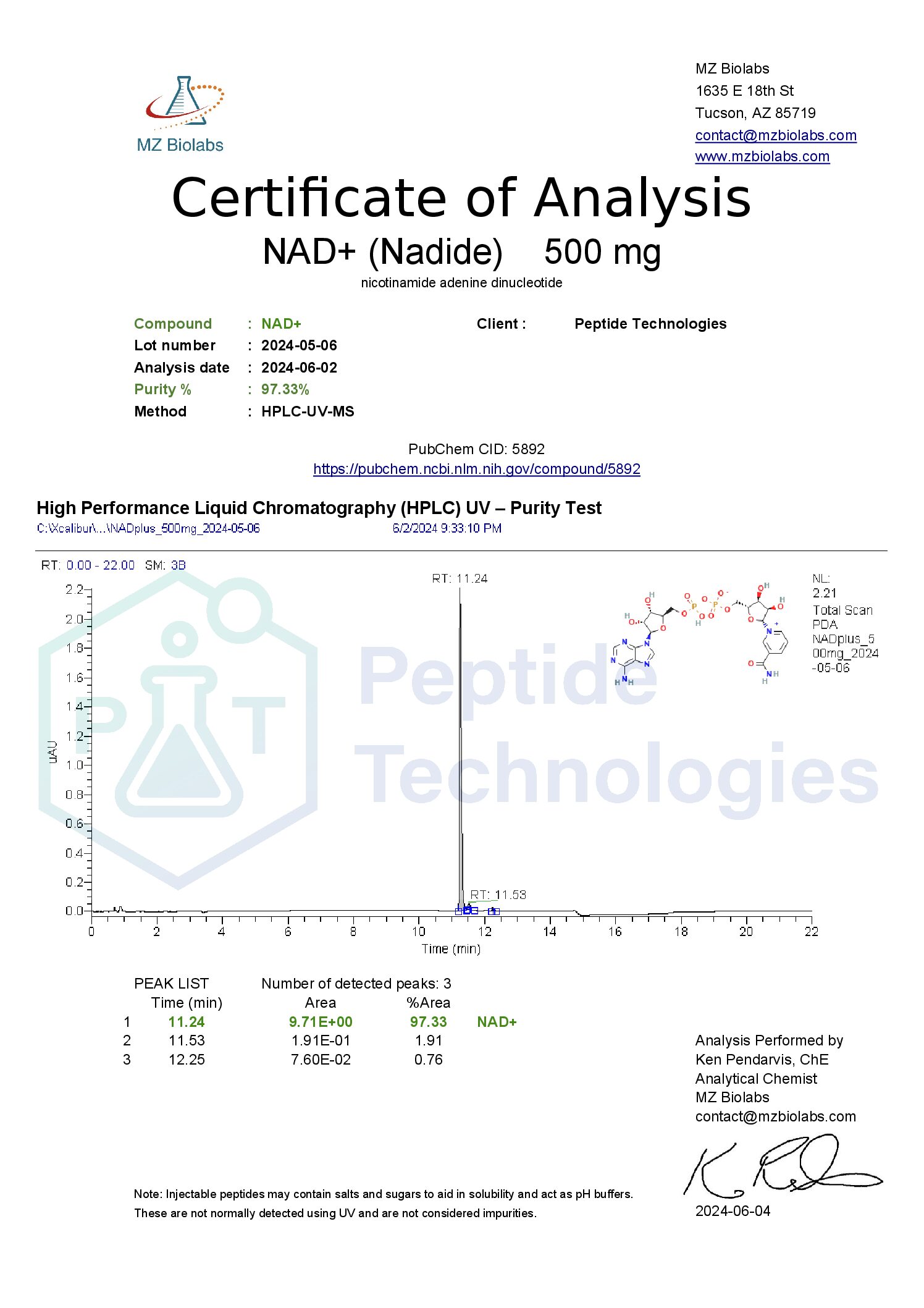
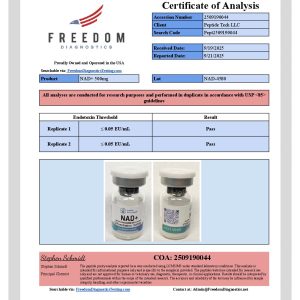
| Purity | ≥99% verified by HPLC & MS (batch COA via on-vial QR) |
| Solubility | Readily soluble in sterile water and compatible neutral buffers; prepare fresh, protect from light, avoid alkaline pH. |
| Intended Use | Laboratory research only (RUO). Not for human or animal use. |
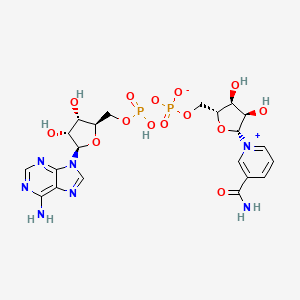
Molecular Structure
Key Features of Peptide Tech
- Same-Day Shipping (Mon–Fri, on in-stock items)
- GMP-Aligned lyophilized reagents
- USA Made
- 24/7 Support
- Price Match Guarantee
- Batch Tracking with QR Code Verification
- 3rd-Party U.S. Lab Testing — purity, quantity, endotoxin
- Cold-Chain Shipping — Always (no paid upgrade)
- Worldwide Shipping
- All Major Payments Accepted
- Text & Email Order Updates
- 2-Day FedEx/UPS Standard
- Cheapest Overnight Rates
- Largest Variety of Peptides & Bioregulators
Potential Applications in Research
Strictly in-vitro, cell-free, or cell-based workflows. No health claims or clinical/veterinary use.
- Oxidoreductase enzyme kinetics (e.g., LDH, MDH, ADH) monitoring NADH formation at 340 nm or via fluorescence to determine Vmax/Km and inhibitor effects.
- Sirtuin deacetylase assays that consume NAD+ to generate OAADPr and nicotinamide, quantified by LC–MS or homogeneous fluorescence kits.
- PARP/ARTD ADP-ribosylation workflows (auto- and trans-modification) with immuno or LC–MS readouts to map poly/mono-(ADP-ribose) formation.
- NAD+-dependent DNA ligase assays (LigA) for nick-sealing efficiency, cofactor dependence, and inhibitor screening.
- Metabolomics method development (LC–MS/MS) for redox-pair profiling of NAD+/NADH and NADP(H) in buffered matrices.
- Assay calibration & stability studies (RP-HPLC/LC–MS) establishing retention, ionization, and recovery of dinucleotides.
Quality, Storage & Handling
Each lot is confirmed by HPLC (purity) and MS (identity); COA and batch data are accessible via QR. Independent U.S. labs verify purity, quantity, and endotoxin.
- Storage (lyophilized): −20 °C long-term or 2–8 °C short-term; keep desiccated and protected from light.
- After reconstitution: Use neutral, oxygen-poor buffer when possible; aliquot and store at ≤−20 °C; avoid repeated freeze–thaw.
- Working solutions: Prepare fresh; minimize exposure to light and high pH to reduce degradation.
Shipping & Fulfillment
Ships with validated cold-chain packaging. In-stock orders placed before the daily cutoff ship the same day. 2-Day FedEx/UPS is standard, with overnight options available. Automated text/email updates included; international shipping available where permitted.
Compliance & RUO Disclaimer
For laboratory research only. Not a drug, cosmetic, food, or household chemical. Not for human or animal use, ingestion, diagnostic, or therapeutic applications. Buyers warrant they are qualified to handle RUO materials under applicable laws and institutional guidelines.
FAQs
- Is this the oxidized form?
- Yes. This product is NAD+ (oxidized). For reduced NADH or NADP(H), see our catalog.
- What purity is provided?
- Each 500 mg vial is ≥99% by HPLC with MS identity confirmation; third-party testing is performed on every lot (COA via QR).
- How should I reconstitute it?
- Use sterile water or a neutral, compatible buffer; gently invert to dissolve. Prepare fresh working solutions, aliquot, and avoid alkaline pH and repeated freeze–thaw.
- Which in-vitro assays is NAD+ commonly used in?
- Typical RUO uses include dehydrogenase kinetics (340 nm), sirtuin and PARP assays, NAD+-dependent ligase reactions, and LC–MS method development for dinucleotides.
Explore More
Browse additional research reagents and accessories at Peptide Tech.
Related Products
Browse more in Peptides.
Always read the label and use products as directed. Consult a qualified professional where appropriate.
Related products