New
$26.95
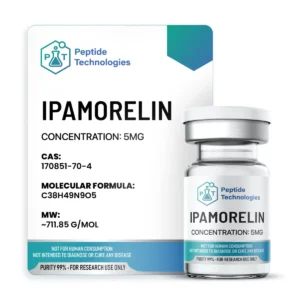
Ipamorelin 5 mg (≥99% Purity) — Research Use Only
Specifications
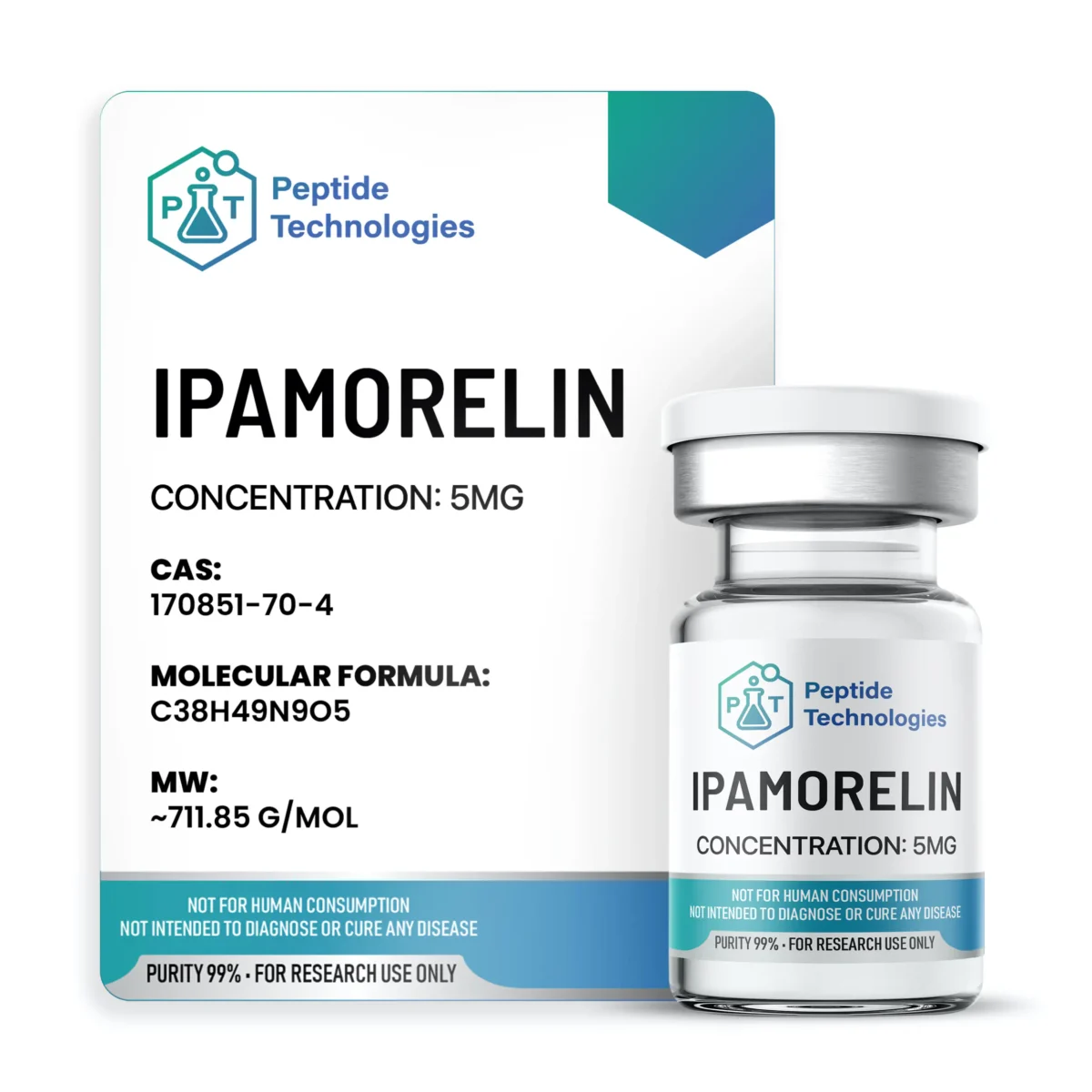
| Chemical Name | Ipamorelin (NNC 26-0161) |
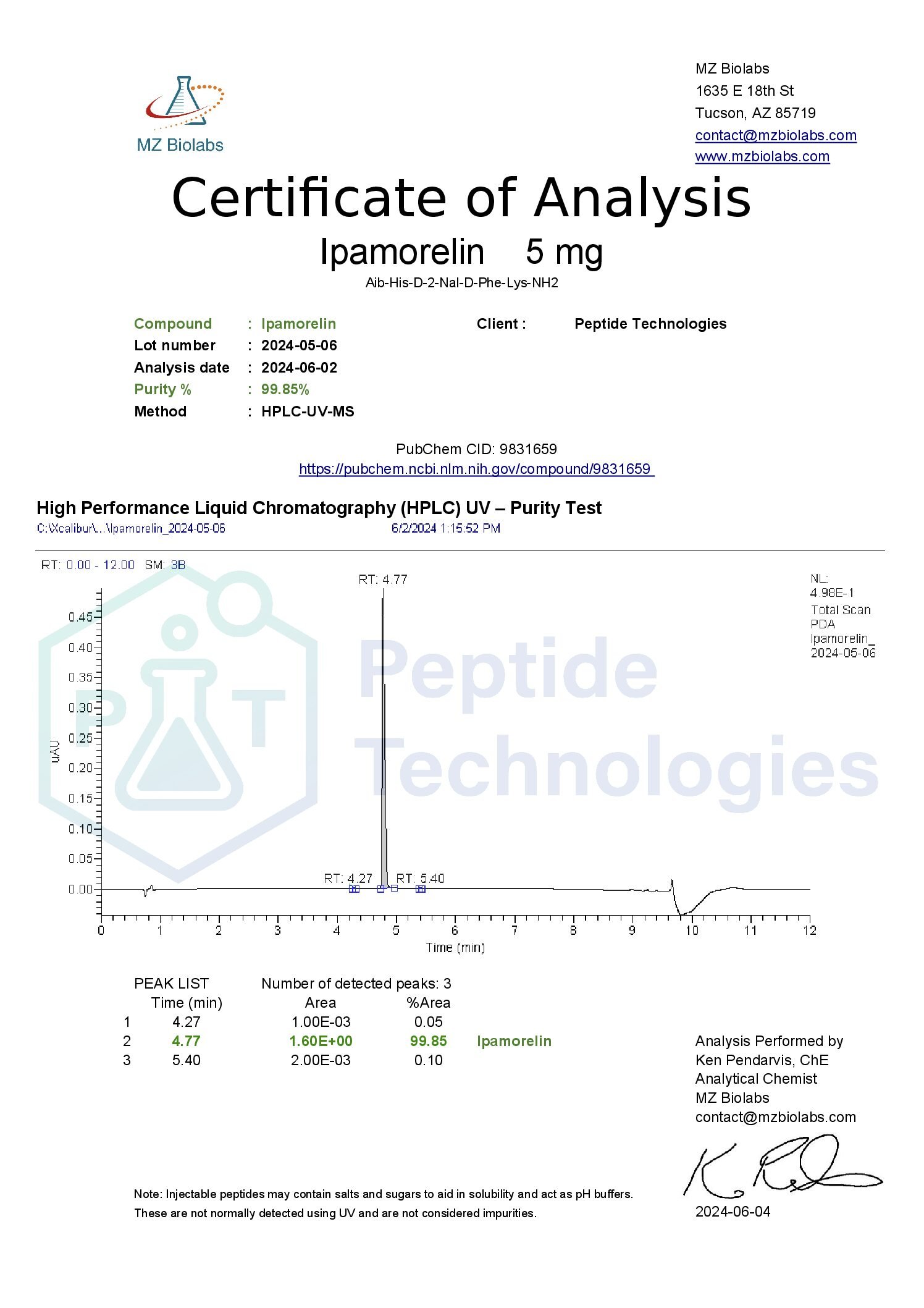
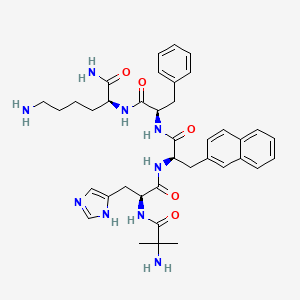
| Sequence | H-Aib-His-D-2-Nal-D-Phe-Lys-NH2 |
| CAS Number | 170851-70-4 |
| PubChem CID | CID 9831659 |
| Molecular Formula | C38H49N9O5 |
| Molecular Weight (avg.) | ≈ 711.85 g/mol |
| Monoisotopic Mass | ≈ 711.39 Da |
| Physical Appearance | White to off-white lyophilized powder |
| Container | 3 mL Type I glass vial (5 mg net content) |
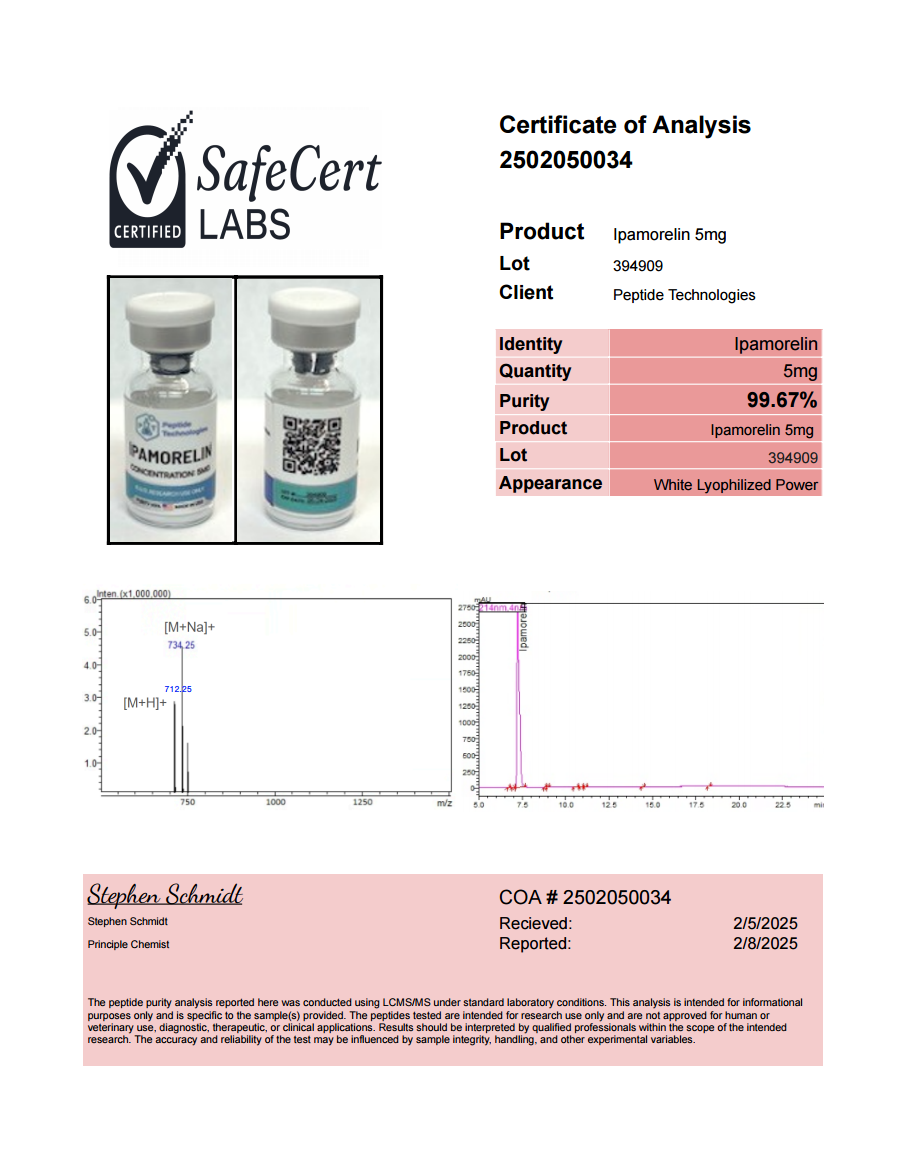
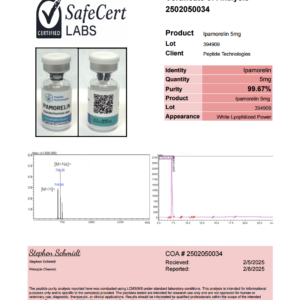
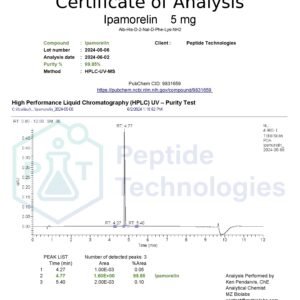
| Purity | ≥ 99% (verified by HPLC & MS; 3rd-party tested) |
| Solubility | Soluble in sterile water or compatible buffer; if needed, pre-wet with ≤0.1% acetic acid or minimal DMSO, then bring to final buffer. 0.22 µm filter-sterilize if required. |
Molecular Structure
Why Peptide Tech
- Same-Day Shipping
- GMP-Aligned Lyophilized Peptides
- USA Made
- 24/7 Support
- Price Match Guarantee
- Batch Tracking with QR Code Verification
- 3rd-Party USA Lab Testing — purity, quantity, endotoxin
- Cold-Chain Shipping — Always (no paid upgrade)
- Worldwide Shipping
- All Major Payments Accepted
- Text & Email Order Updates
- 2-Day FedEx/UPS Shipping Standard
- Cheapest Overnight Rates
- Largest Variety of Peptides & Bioregulators
Storage & Handling
- Lyophilized (unopened): Store at ≤ −20 °C, desiccated and protected from light. For long-term archival, ≤ −80 °C is recommended.
- After reconstitution: Aliquot into sterile, low-binding tubes; store at ≤ −80 °C. Avoid repeated freeze–thaw cycles.
- Handling: Allow vial to reach room temperature before opening to minimize condensation. Use sterile technique and neutral pH buffers; add carrier protein (e.g., 0.1% BSA) if adsorption is a concern.
- Research Use Only (RUO): Not for human or veterinary use, ingestion, diagnostic, or therapeutic applications.
Potential Applications in Research
Strictly in-vitro, cellular, or biochemical contexts — no clinical or human-use claims.
- GHS-R1a receptor pharmacology: Quantify potency/efficacy in pituitary or heterologous cell systems using Ca2+ mobilization and downstream readouts (e.g., ERK).
Raun et al., 1998. - Selectivity profiling vs. other endocrine axes: Compare GH-secretagogue activity with minimal off-target effects in vitro (e.g., ACTH/cortisol pathways) to benchmark assay specificity.
Raun et al., 1998. - Receptor trafficking & desensitization: Study GHS-R internalization/β-arrestin recruitment and recovery kinetics in cell-based models.
Howard et al., 1996. - Analytical method development: Build LC-MS/MS stability and quantitation methods for peptide exposure and in-matrix recovery; use exposure-response datasets to inform PK/PD modeling frameworks.
Gobburu et al., 1999. - Gastrointestinal smooth-muscle pathway assays (ex vivo): Explore ghrelin-receptor–mediated effects on contractility in isolated tissue preparations under controlled conditions.
Greenwood-Van Meerveld et al., 2012.
Citations (PubMed)
- Howard, A.D., et al. “A receptor in pituitary and hypothalamus that functions in growth hormone release.” Science, 1996;273(5277):974-977.
PMID: 8688086 - Raun, K., et al. “Ipamorelin, the first selective growth hormone secretagogue.” European Journal of Endocrinology, 1998;139(5):552-561.
PMID: 9849822 - Gobburu, J.V.S., Agersø, H., Jusko, W.J., Ynddal, L. “Pharmacokinetic–pharmacodynamic modeling of ipamorelin, a growth hormone releasing peptide, in human volunteers.” Pharmaceutical Research, 1999;16(9):1412-1416.
PMID: 10496658 - Greenwood-Van Meerveld, B., Tyler, K., Mohammadi, E., Pietra, C. “Efficacy of ipamorelin, a ghrelin mimetic, on gastric dysmotility in a rodent model of postoperative ileus.” Journal of Experimental Pharmacology, 2012;4:149-155.
PMID: 27186127
Compliance & RUO Disclaimer
For laboratory research use only (RUO). Not a drug, food, or cosmetic. Not for human or veterinary use. Purchase and use are limited to qualified personnel operating under institutional laboratory guidelines.
Related products
New
New
New
New
New
New
New
New