$49.95
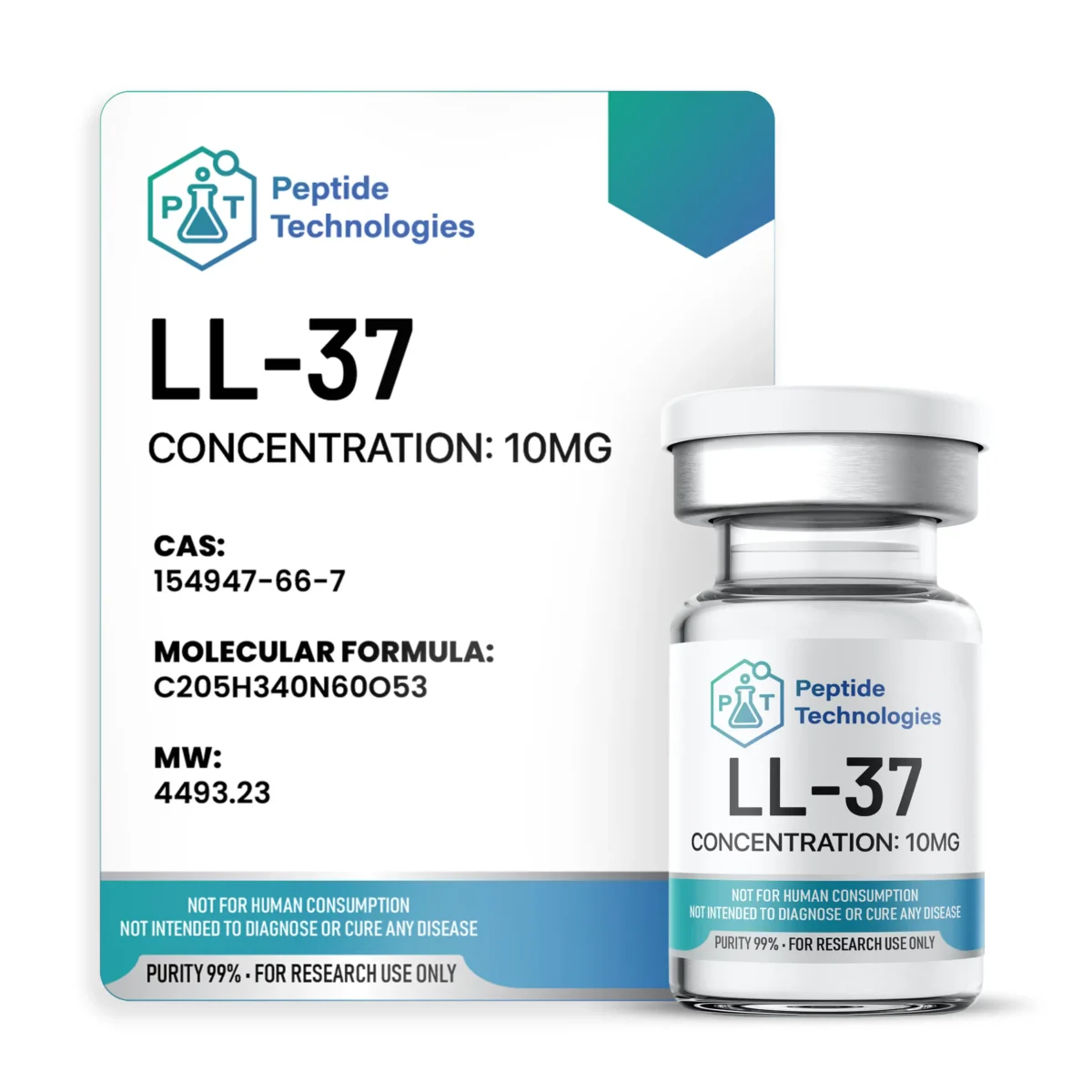
LL-37 10 mg (human cathelicidin; hCAP18 C-terminal fragment) from Peptide Tech is a premium, lyophilized research-use-only (RUO) peptide supplied at ≥99% purity (HPLC & MS verified). The 37-residue sequence
LLGDFFRKSKEKIGKEFKRIVQRIKDFLRNLVPRTES is formatted for reproducible in-vitro antimicrobial-peptide mechanism studies, membrane biophysics, receptor pharmacology, and analytical method development—backed by batch traceability, third-party testing, and validated cold-chain shipping.
Specifications
| Property | Details |
|---|---|
| Product | LL-37 — lyophilized peptide, 10 mg |
| Chemical Name | Human cathelicidin LL-37 (C-terminal fragment of hCAP18) |
| Synonyms | Cathelicidin; hCAP18 (C-term); Ropocamptide |
| Sequence | LLGDFFRKSKEKIGKEFKRIVQRIKDFLRNLVPRTES (37 aa) |
| CAS Number | 154947-66-7 |
| PubChem CID | 16198951 |
| Molecular Formula | C205H340N60O53 (free base) |
| Molecular Weight | ≈ 4493.3 g/mol (free base) |
| Appearance | White to off-white lyophilized powder |
| Content per Vial | 10 mg |
| Container | 3 mL Type I glass vial; butyl stopper; flip-off seal |
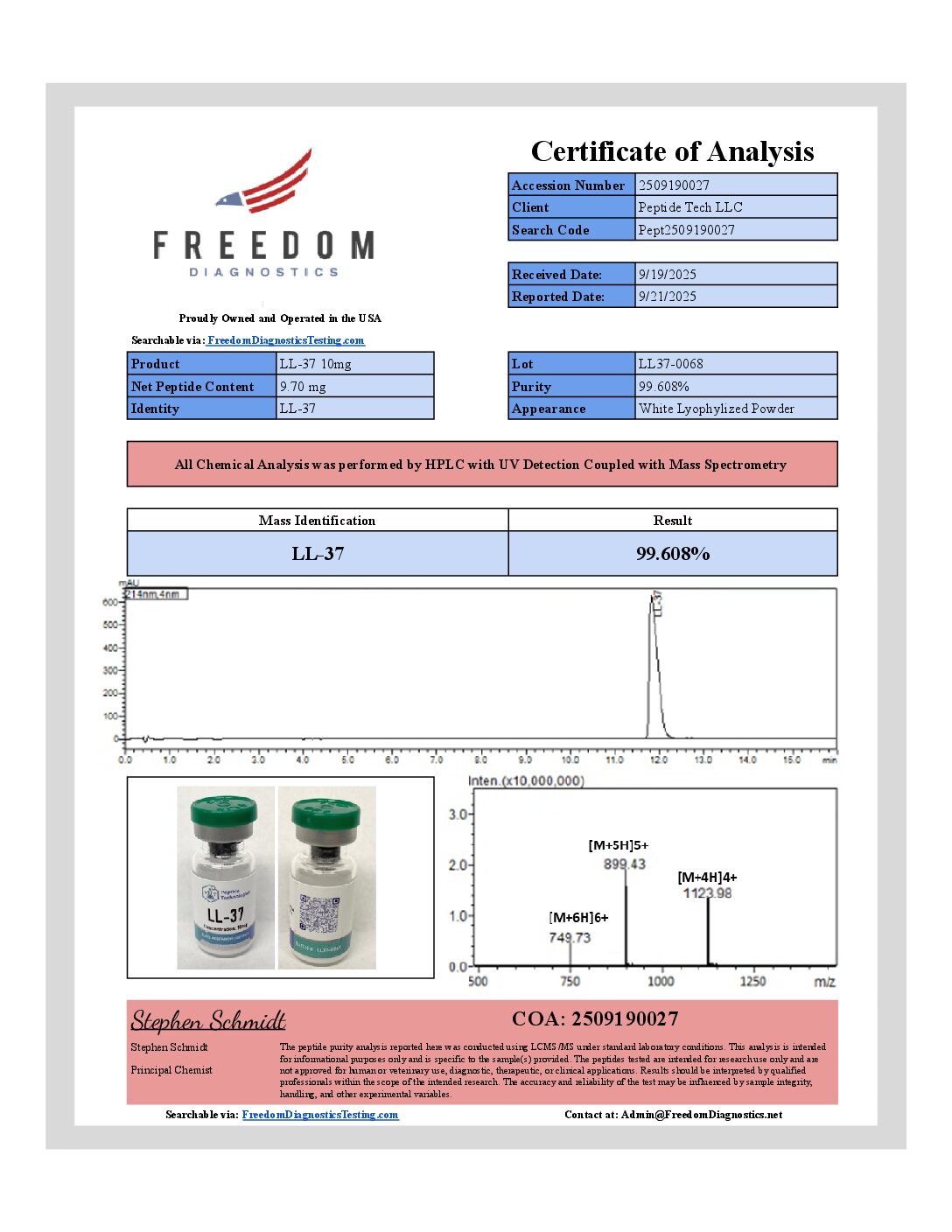
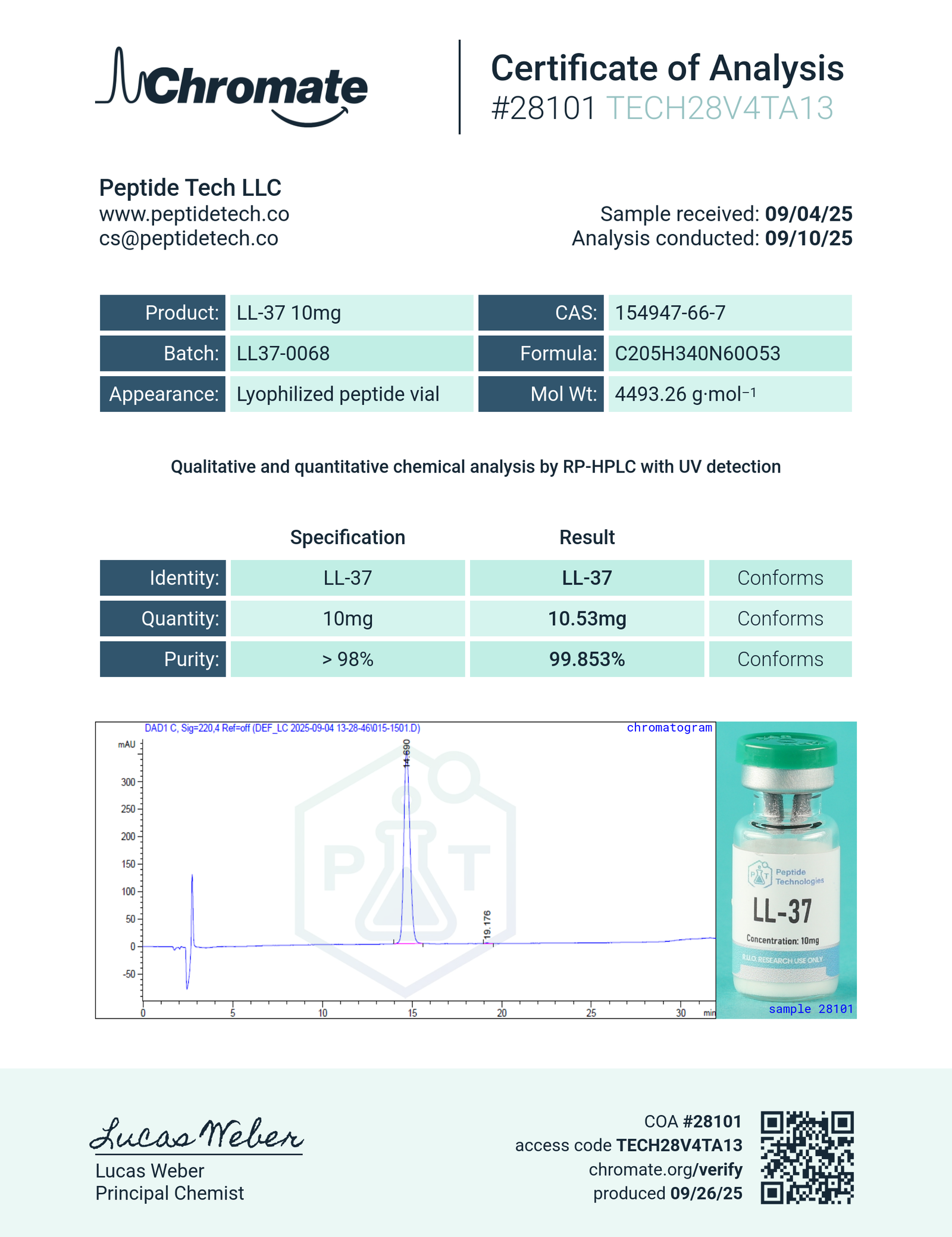
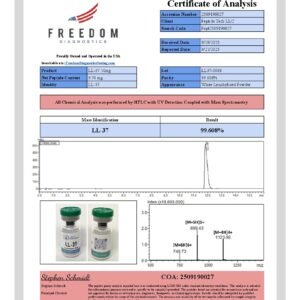
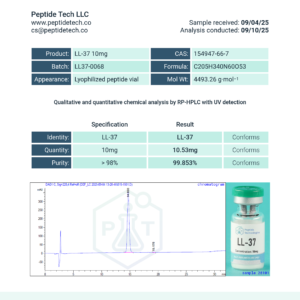
| Purity / Identity | ≥99% by HPLC; identity by MS (batch COA via on-vial QR) |
| Counter-ion | Typically acetate unless otherwise stated on COA |
| Solubility | Soluble in sterile water or neutral buffers; for higher concentrations, pre-wet with ≤0.1% acetic acid, then bring to final buffer. If sterility is required by your SOP, 0.22 µm filter after dissolution. |
| Storage (lyophilized) | −20 °C long-term; store desiccated and protected from light |
| After Reconstitution | Aliquot and store at ≤ −20 °C (or −80 °C per SOP); avoid repeat freeze–thaw cycles |
| Intended Use | RUO only. Not for human or animal use |
Molecular Structure
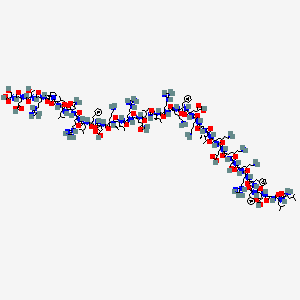
View on PubChem (CID 16198951).
Key Features of Peptide Tech
- Same-Day Shipping (Mon–Fri, on in-stock items)
- GMP-Aligned lyophilization & documentation
- USA-Made peptides
- 24/7 Support & Price Match Guarantee
- Batch QR for instant COA & chain-of-custody verification
- 3rd-Party U.S. Lab Testing — purity, quantity, endotoxin
- Cold-Chain Shipping — Always (no paid upgrade)
- Worldwide Shipping; all major payments accepted
- Text & Email order updates; 2-Day FedEx/UPS standard with low-cost overnight
- Largest Variety of peptides & bioregulators
Potential Applications in Research (RUO)
Strictly for laboratory research. No health, diagnostic, or therapeutic claims.
- Membrane disruption models — quantify peptide-induced leakage in lipid vesicles/bacterial-mimetic bilayers; relate to amphipathic helix features reported for LL-37 and fragments (e.g., KR-12). :contentReference[oaicite:0]{index=0}
- Receptor/chemotaxis assays — evaluate FPRL1/FPR2-dependent signaling using HEK293-FPRL1 cells and primary immune cells (Ca2+ mobilization, migration). :contentReference[oaicite:1]{index=1}
- LPS/TLR pathway readouts — test LPS neutralization and TLR2/TLR4 reporter inhibition under defined conditions (e.g., HEK-Blue systems). :contentReference[oaicite:2]{index=2}
- Epithelial wound-closure models — determine effects on scratch assays and proliferation in airway epithelial cell lines with standardized serum/EGFR pathway controls. :contentReference[oaicite:3]{index=3}
- Analytical method development — implement stability-indicating RP-HPLC/LC–MS(/MS) for identity, purity, recovery, and forced-degradation across buffers and temperatures (general SOPs; peptide-specific parameters validated per lot COA).
Citations (selected)
- Yang, Dawei, et al. “LL-37, the Neutrophil Granule– and Epithelial Cell–Derived Cathelicidin, Utilizes FPRL1 as a Receptor to Chemoattract Human Peripheral Blood Neutrophils, Monocytes, and T Cells.” Journal of Experimental Medicine 192.7 (2000): 1069–1074. Link. :contentReference[oaicite:4]{index=4}
- Vandamme, Dries, et al. “Human Endogenous Antibiotic LL-37 Stimulates Airway Epithelial Cell Proliferation and Wound Closure.” American Journal of Physiology-Lung Cellular and Molecular Physiology 289.5 (2005): L842–L852. PDF. :contentReference[oaicite:5]{index=5}
- Wang, Guangshun, et al. “Structures of Human Host Defense Cathelicidin LL-37 and Its Smallest Antimicrobial Peptide KR-12 in Lipid Micelles.” Journal of Biological Chemistry 283.47 (2008): 32637–32643. PDB 2K6O. :contentReference[oaicite:6]{index=6}
- InvivoGen. “LL-37 / hCAP18: Antimicrobial Peptide.” Product page/specifications including TLR2/TLR4 reporter validation. Link. :contentReference[oaicite:7]{index=7}
Quality, Storage & Handling
Every lot is confirmed by HPLC (purity) and MS (identity); the on-vial QR links to the batch COA. Independent U.S. labs verify purity, quantity, and endotoxin.
- Storage (lyophilized): −20 °C long-term or 2–8 °C short-term; keep desiccated and protected from light.
- After reconstitution: Aliquot and store at ≤ −20 °C (or −80 °C per SOP); avoid repeated freeze–thaw cycles.
- Reconstitution tips: Use sterile water or suitable buffer; gently swirl/invert to dissolve. If sterility is required, 0.22 µm filter and aliquot promptly.
Shipping & Fulfillment
Ships with validated cold-chain packaging. In-stock orders placed before the daily cutoff ship the same day. 2-Day FedEx/UPS is standard, with overnight options available. Automated text/email updates included; international shipping available where permitted.
Compliance & RUO Disclaimer
For laboratory research only. Not a drug, cosmetic, food, or household chemical. Not for human or animal use, ingestion, diagnostic, or therapeutic applications. Purchasers warrant appropriate qualifications and compliance with applicable regulations and institutional policies.
FAQs
- Is LL-37 the only human cathelicidin?
- Yes—the CAMP gene encodes the precursor (hCAP18) from which the active 37-mer LL-37 is generated; LL-37 is the sole human cathelicidin. :contentReference[oaicite:8]{index=8}
- Do you provide a PubChem image?
- Yes—the 2D structure above is rendered from PubChem CID 16198951 for LL-37. (Identifier also listed by multiple reagent databases.) :contentReference[oaicite:9]{index=9}
- What purity do you provide?
- Each 10 mg vial is ≥99% by HPLC with MS identity confirmation; third-party testing is performed on every lot (COA via on-vial QR).
- How should I reconstitute it?
- Dissolve in sterile water or a compatible buffer; gently invert until fully dissolved. If your SOP requires sterility, 0.22 µm filter and aliquot to avoid repeat freeze–thaw.
Explore More
Browse additional research peptides and accessories at
Peptide Tech.
Related products