$39.95
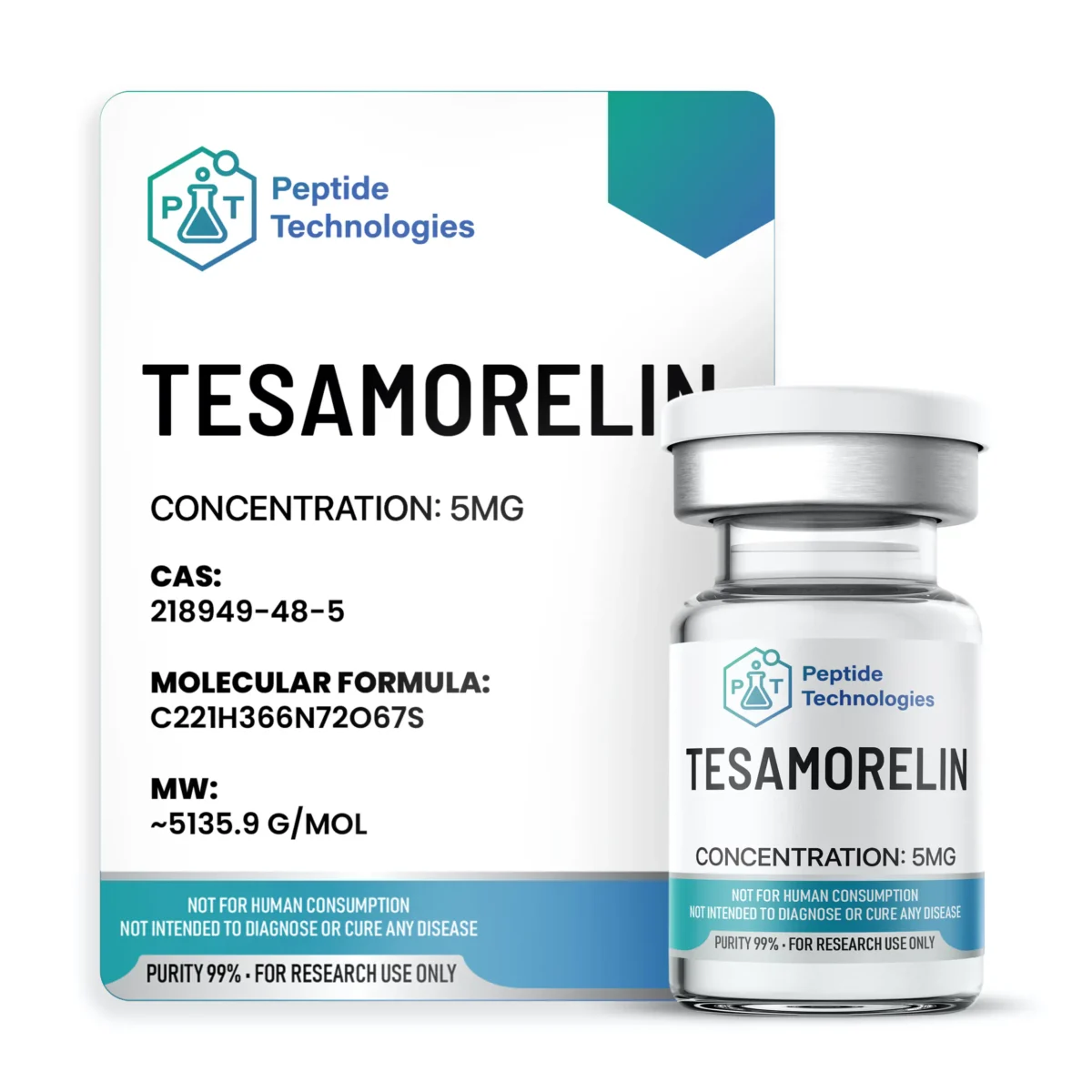
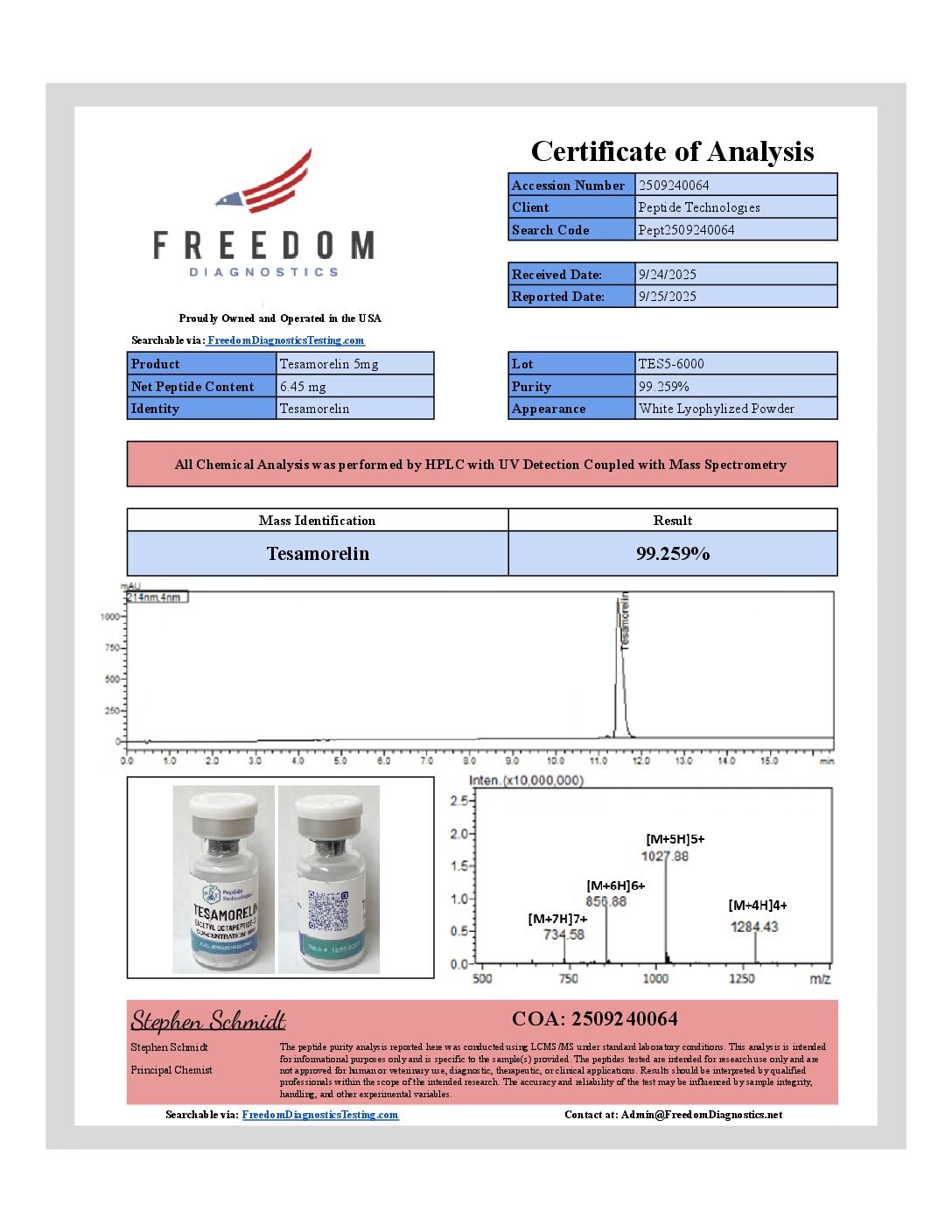
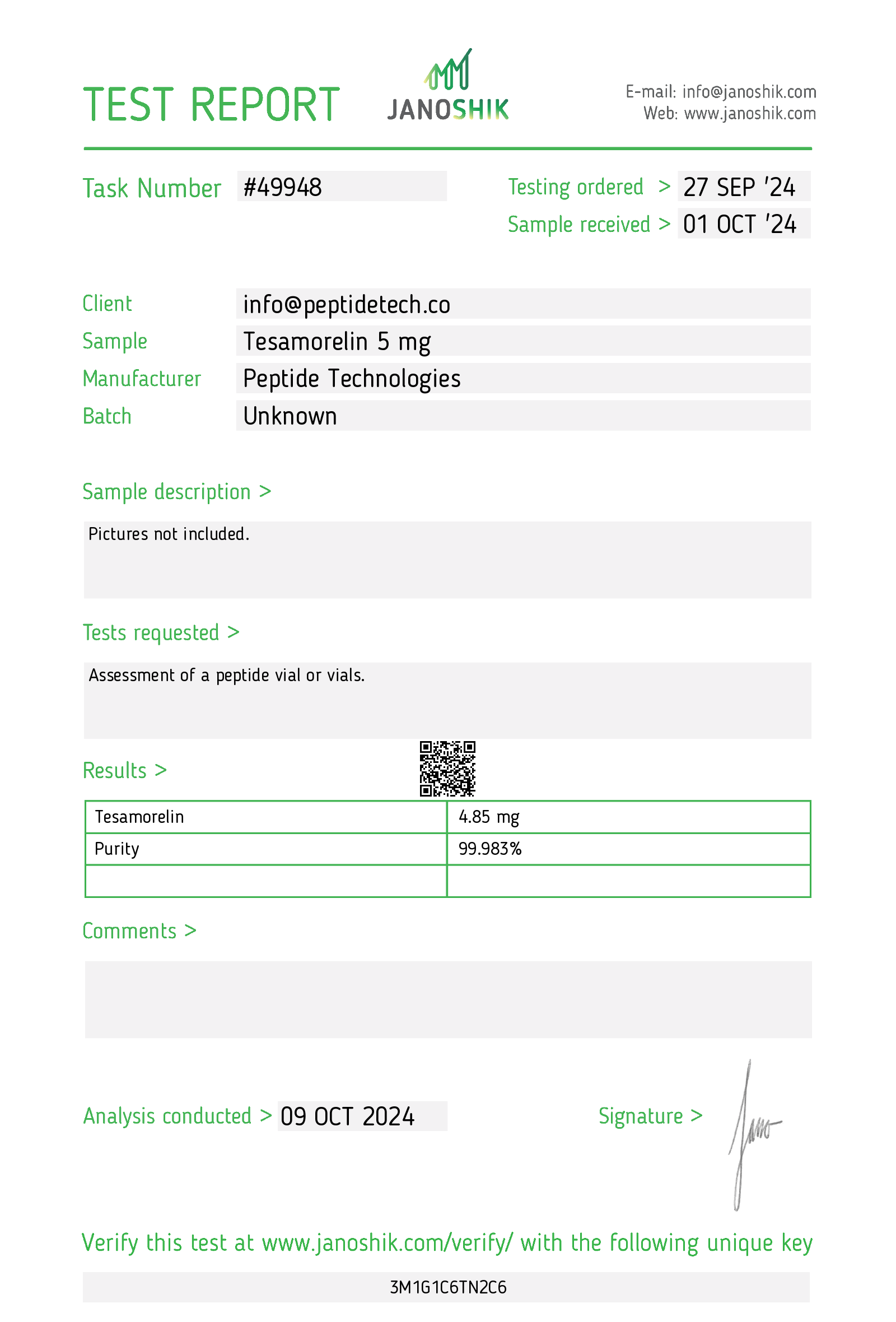
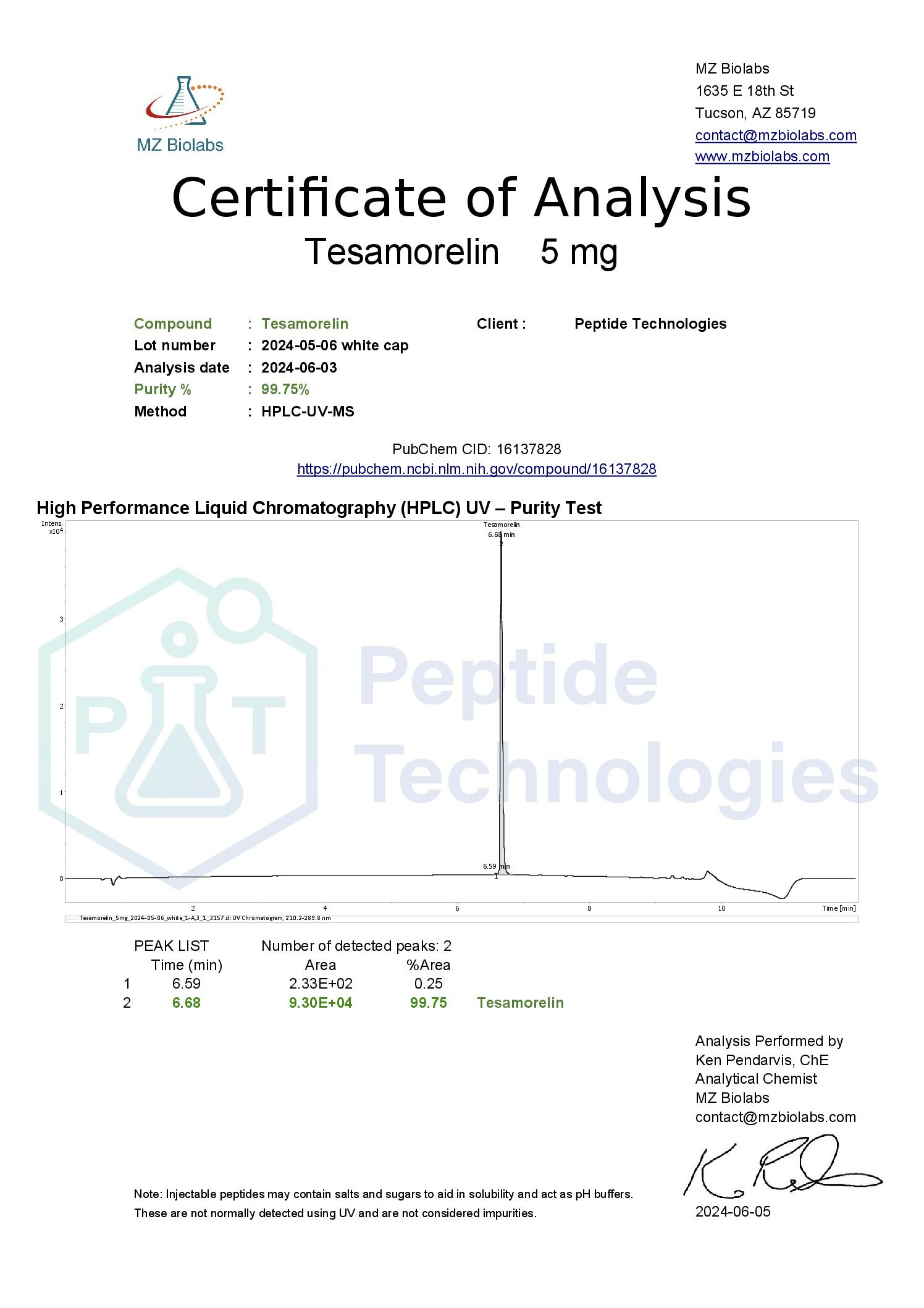
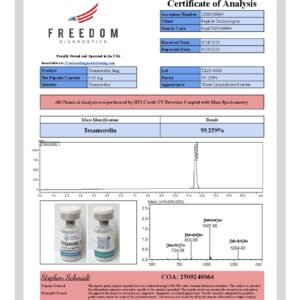
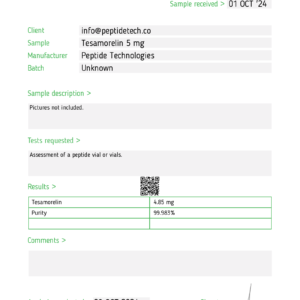
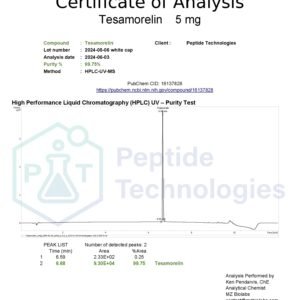
Tesamorelin 5 mg is a synthetic GHRH analog (44 aa + trans-3-hexenoic acid) provided by Peptide Tech at ≥ 99% purity (HPLC & MS verified) for in-vitro, cellular, and biochemical research use only (RUO). This stabilized peptide is favored in experimental models examining GH-axis regulation, metabolic signaling, and pituitary feedback mechanisms. Supplied as a lyophilized powder with full traceability and third-party verification, Tesamorelin is optimized for reliable and reproducible laboratory research.
Specifications
| Property | Details |
|---|---|
| CAS Number | 218949-48-5 |
| Chemical Name | Synthetic GHRH analog, 44 amino acids with N-terminal modification |
| PubChem CID | PubChem CID 16137828 |
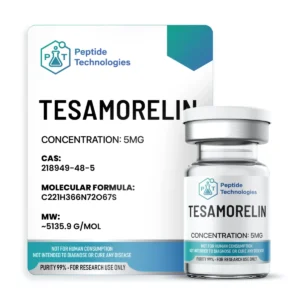
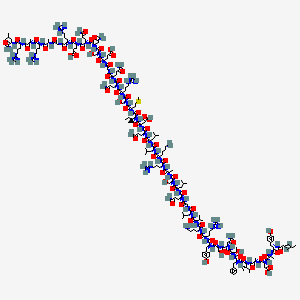
| Molecular Formula | C221H366N72O67S |
| Molecular Weight | ≈ 5135.9 g/mol |
| Physical Appearance | White to off-white lyophilized powder |
| Container | 3 mL glass vial (5 mg net content) |
| Purity | ≥ 99% verified by HPLC & MS |
| Solubility | Soluble in sterile water or compatible buffer; gently invert until dissolved; filter-sterilize if needed |
Molecular Structure
Storage & Handling
Lyophilized Storage: Store unopened vials at ≤ 6 °C (refrigerated), sealed, away from heat, light, and moisture.
For long-term storage, ≤ −20 °C is recommended.
After Reconstitution: Prepare sterile aliquots in buffer; store at ≤ −20 °C.
Avoid repeated freeze–thaw cycles to maintain peptide integrity.
- Use sterile technique and aseptic conditions.
- Allow vial to warm to room temperature before opening to minimize condensation.
- Dissolve gently — do not vortex aggressively.
- Filter-clarify if using in sterile cell culture systems.
Research Applications
(Strictly in-vitro, cellular, or biochemical contexts — no clinical or human-use claims.)
- GH release modeling: Used to stimulate growth hormone secretion in pituitary culture and perfusion systems.
- Endocrine regulation assays: Useful for analyzing hypothalamo-pituitary receptor pharmacology and feedback loops.
- Metabolic signaling studies: Applied in models examining lipid metabolism and endocrine crosstalk.
- Peptide stability comparisons: Explored in receptor-binding and degradation resistance assays.
Citations
- Grunfeld, C., et al. “Effects of Tesamorelin, a Growth Hormone–Releasing Factor Analog, in HIV-Infected Patients with Abdominal Fat Accumulation.” Journal of Clinical Endocrinology & Metabolism, vol. 92, no. 11, 2007, pp. 4265–4273. PubMed
- Falutz, J., et al. “Metabolic Effects of a Growth Hormone–Releasing Factor in Patients with HIV.” New England Journal of Medicine, vol. 357, no. 23, 2007, pp. 2359–2370. PubMed
- Allas, S., et al. “Long-Term Safety and Effects of Tesamorelin, a Growth Hormone-Releasing Factor Analog, in HIV-Infected Patients with Abdominal Fat Accumulation.” Journal of Acquired Immune Deficiency Syndromes, vol. 53, no. 3, 2010, pp. 311–322. PubMed
- Engelson, E. S., et al. “Body Composition and Metabolic Effects of Tesamorelin in Non–HIV Adults with Abdominal Obesity.” Obesity, vol. 24, no. 6, 2016, pp. 1176–1183. PubMed
- Fleseriu, M., et al. “Endocrine and Metabolic Effects of Tesamorelin, a Synthetic Growth Hormone–Releasing Factor, in Healthy Volunteers.” Journal of Clinical Pharmacology, vol. 49, no. 6, 2009, pp. 697–707. PubMed
Compliance & RUO Disclaimer
For laboratory research use only (RUO). Not for human or veterinary use, ingestion, diagnostic, or therapeutic applications.
Buyers must be qualified researchers operating under institutional guidelines.
Related products