$39.95
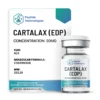
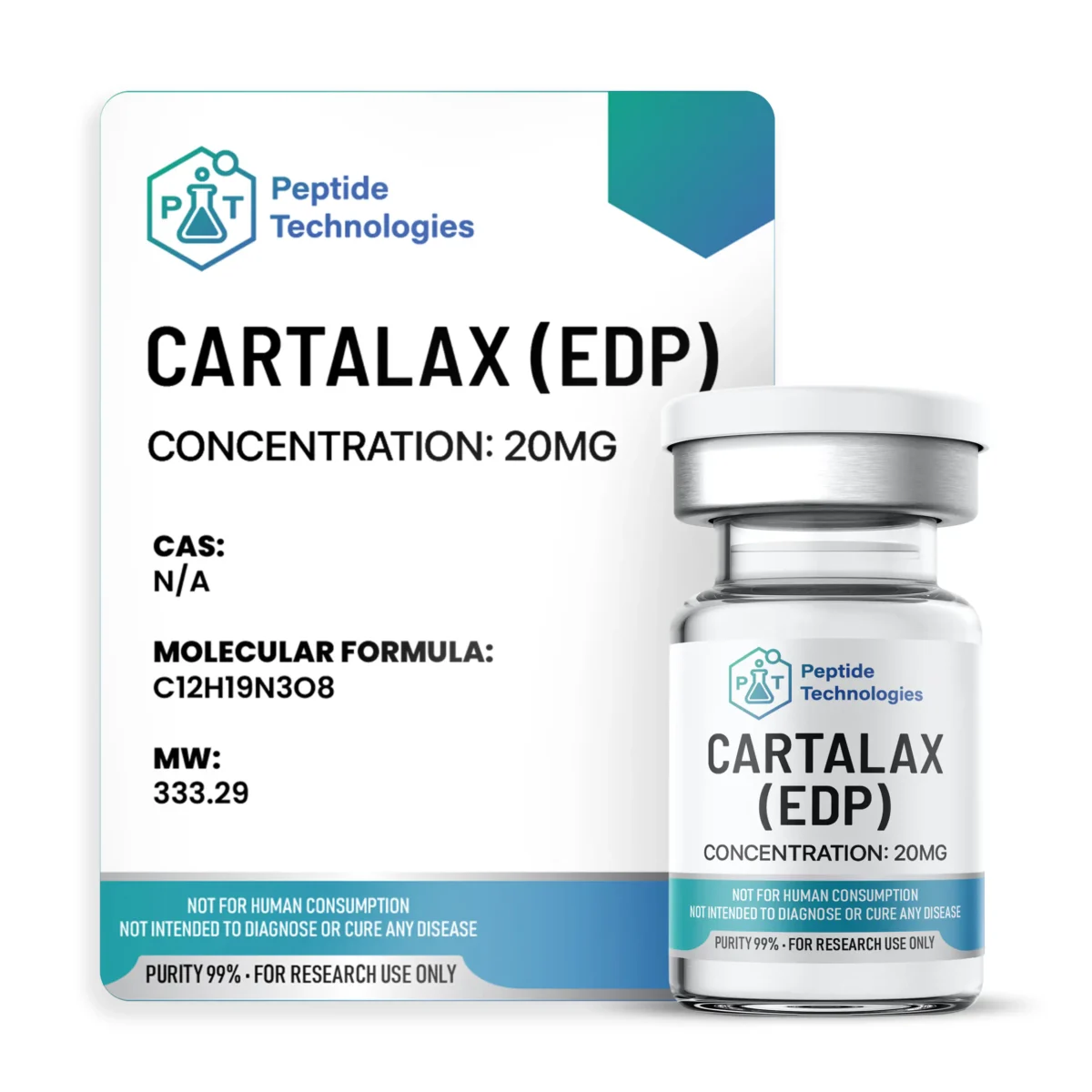
Cartalax 20 mg (AED; Ala–Glu–Asp) from Peptide Tech is a premium, lyophilized research-use-only (RUO) tripeptide supplied at ≥99% purity (HPLC & MS verified). The sequence H-Ala-Glu-Asp-OH is prepared for rigorous in-vitro studies in fibroblast/chondrocyte biology, extracellular-matrix readouts, and analytical method development—backed by lot traceability, independent third-party testing, and validated cold-chain logistics.
Specifications
| Property | Details |
|---|---|
| Product | Cartalax — lyophilized peptide, 20 mg |
| Chemical Name | H-Ala-Glu-Asp-OH (L-alanyl-L-glutamyl-L-aspartic acid) |
| Synonyms | AED; T-31; Ala-Glu-Asp |
| Sequence | Ala–Glu–Asp (A-E-D) |
| CAS Number | Not assigned (sequence-defined RUO tripeptide) |
| PubChem CID | 87815447 |
| Molecular Formula | C12H19N3O8 |
| Molecular Weight | ≈ 333.29 g/mol |
| Appearance | White to off-white lyophilized powder |
| Container | 3 mL Type I glass vial; butyl stopper; flip-off seal |
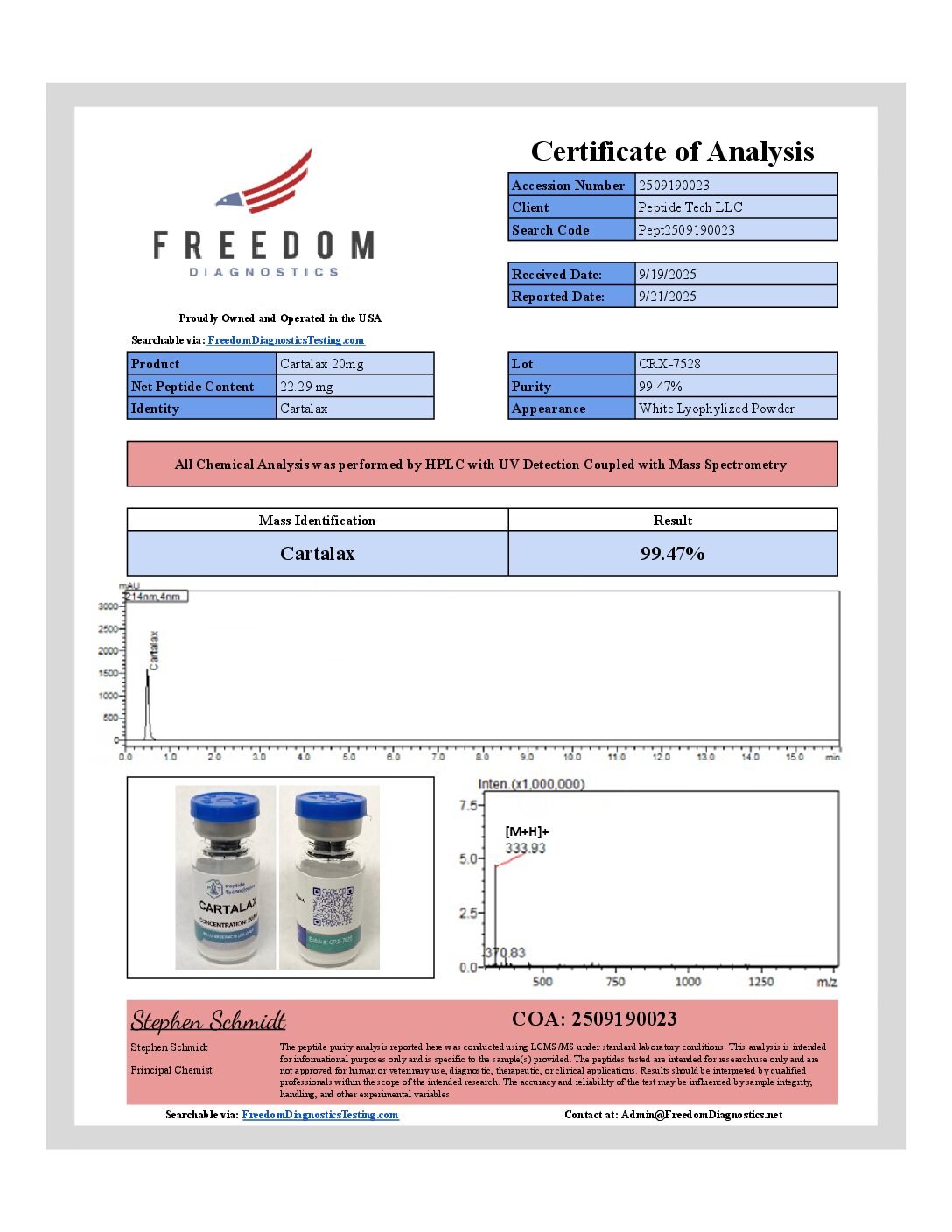
| Purity / Identity | ≥99% by HPLC; identity by MS (batch COA via on-vial QR) |
| Counter-ion | Typically acetate (verify on lot COA) |
| Solubility | Soluble in sterile water or neutral buffers; for rapid wetting at higher concentrations, pre-wet with ≤0.1% acetic acid, then bring to buffer. If sterility is required by your SOP, filter (0.22 µm). |
| Storage (lyophilized) | −20 °C long-term; store desiccated and protected from light. |
| After Reconstitution | Aliquot; store at ≤ −20 °C (or −80 °C per SOP); avoid repeat freeze–thaw cycles. |
| Intended Use | RUO only. Not for human or animal use. |
Molecular Structure

View on PubChem (CID 87815447)
Key Features of Peptide Tech
- Same-Day Shipping (Mon–Fri, on in-stock items)
- GMP-Aligned lyophilization & documentation
- USA-Made peptides
- 24/7 Support & Price Match Guarantee
- Batch QR for instant COA & chain-of-custody verification
- 3rd-Party U.S. Lab Testing — purity, quantity, endotoxin
- Cold-Chain Shipping — Always (no paid upgrade)
- Worldwide Shipping; all major payments accepted
- Text & Email order updates; 2-Day FedEx/UPS standard with low-cost overnight
- Largest Variety of peptides & bioregulators
Potential Applications in Research (RUO)
Strictly for laboratory research. No health, diagnostic, or therapeutic claims.
- Fibroblast assays (proliferation & senescence panels): quantify Ki-67, CDKN1A (p21), and p53 signaling with AED exposure in human dermal or lung fibroblasts; include apoptosis markers (Annexin V/PI) and NF-κB reporter readouts for pathway mapping.
- Chondrocyte matrix & phenotype readouts: evaluate COL2A1, ACAN, and MMP13 by RT-qPCR/ELISA; apply pellet culture with histology (Safranin O/fast green) to track glycosaminoglycan and type-II collagen content.
- Cell-migration (scratch) assays: perform standardized wound-closure assays in fibroblast monolayers to assess migration dynamics under controlled AED dosing and serum conditions.
- Peptide–DNA interaction workflows: model or test short peptide interactions with defined promoter motifs using fluorescence quenching/displacement or EMSA; compare against literature-reported sequence preferences for short peptides.
- Analytical method development: establish RP-HPLC/LC-MS(/MS) identity, purity, recovery, and forced-degradation stability across buffers, pH, and temperature to validate lab SOPs.
Citations (selected)
- Liang, Chun-Chi, Ann Y. Park, and Jun-Lin Guan. “In Vitro Scratch Assay: A Convenient and Inexpensive Method for Analysis of Cell Migration in vitro.” Nature Protocols, vol. 2, no. 2, 2007, pp. 329–333. https://doi.org/10.1038/nprot.2007.30.
- Wu, Ling, Janine N. Post, and Marcel Karperien. “Engineering Cartilage Tissue by Pellet Coculture of Chondrocytes and Mesenchymal Stromal Cells.” Methods in Molecular Biology, vol. 1226, 2014, pp. 31–41. https://doi.org/10.1007/978-1-4939-1619-1_4.
- Caputi, Sergio, et al. “Effect of Short Peptides on Neuronal Differentiation of Stem Cells.” International Journal of Immunopathology and Pharmacology, vol. 33, 2019, pp. 1–12. https://doi.org/10.1177/2058738419828613.
- Fedoreyeva, L. I., et al. “Penetration of Short Fluorescence-Labeled Peptides into the Nucleus in HeLa Cells and in vitro Specific Interaction of the Peptides with Deoxyribooligonucleotides and DNA.” Biochemistry (Moscow), vol. 76, no. 11, 2011, pp. 1210–1219. https://doi.org/10.1134/S0006297911110022.
- Khavinson, V. Kh., N. S. Lin’kova, and S. I. Tarnovskaya. “Short Peptides Regulate Gene Expression.” Bulletin of Experimental Biology and Medicine, vol. 162, 2016, pp. 288–292. https://doi.org/10.1007/s10517-016-3596-7.
Quality, Storage & Handling
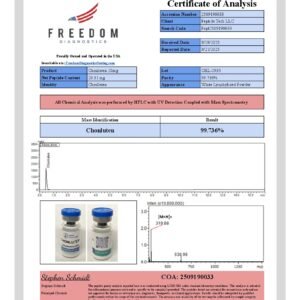
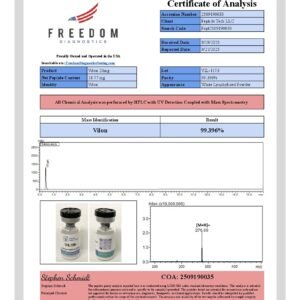
Every lot is confirmed by HPLC (purity) and MS (identity); the on-vial QR links to the batch COA. Independent U.S. labs verify purity, quantity, and endotoxin.
- Storage (lyophilized): −20 °C long-term or 2–8 °C short-term; keep desiccated and protected from light.
- After reconstitution: Aliquot and store at ≤ −20 °C (or −80 °C per SOP); avoid repeated freeze–thaw cycles.
- Reconstitution tips: Use sterile water or compatible buffer; gently swirl/invert to dissolve. If your SOP requires sterility, 0.22 µm filter and aliquot promptly.
Shipping & Fulfillment
Ships with validated cold-chain packaging. In-stock orders placed before the daily cutoff ship the same day. 2-Day FedEx/UPS is standard, with overnight options available. Automated text/email updates included; international shipping available where permitted.
Compliance & RUO Disclaimer
For laboratory research only. Not a drug, cosmetic, food, or household chemical. Not for human or animal use, ingestion, diagnostic, or therapeutic applications. Purchasers warrant appropriate qualifications and compliance with applicable regulations and institutional policies.
FAQs
- Is Cartalax the same as Chonluten, Vesugen, or Vilon?
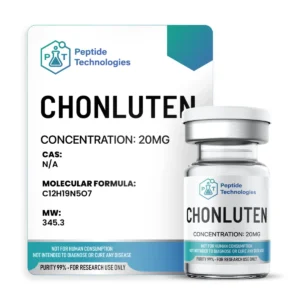
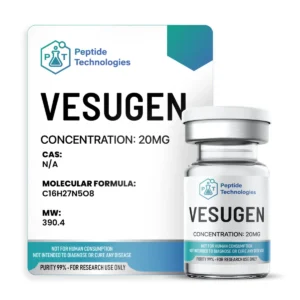
- No. Cartalax is the tripeptide Ala–Glu–Asp (AED). Chonluten is Glu–Asp–Pro (EDP), Vesugen is Lys–Glu–Asp (KED), and Vilon is Lys–Glu (KE). Confirm the sequence required by your assay.
- Do you provide a PubChem image?
- Yes—the 2D structure above is rendered from PubChem CID 87815447 for AED (Ala–Glu–Asp).
- What purity do you provide?
- Each 20 mg vial is ≥99% by HPLC with MS identity confirmation; third-party testing is performed on every lot (COA via on-vial QR).
- How should I reconstitute it?
- Dissolve in sterile water or a compatible buffer; gently invert until fully dissolved. If your SOP requires sterility, 0.22 µm filter and aliquot to avoid repeat freeze–thaw.
Explore More
Browse additional research peptides and accessories at Peptide Tech.
Related products